Structuring QA and Engineering Collaboration in Agentic Teams
AI agents expose gaps between intent and implementation that human code review cannot catch alone.
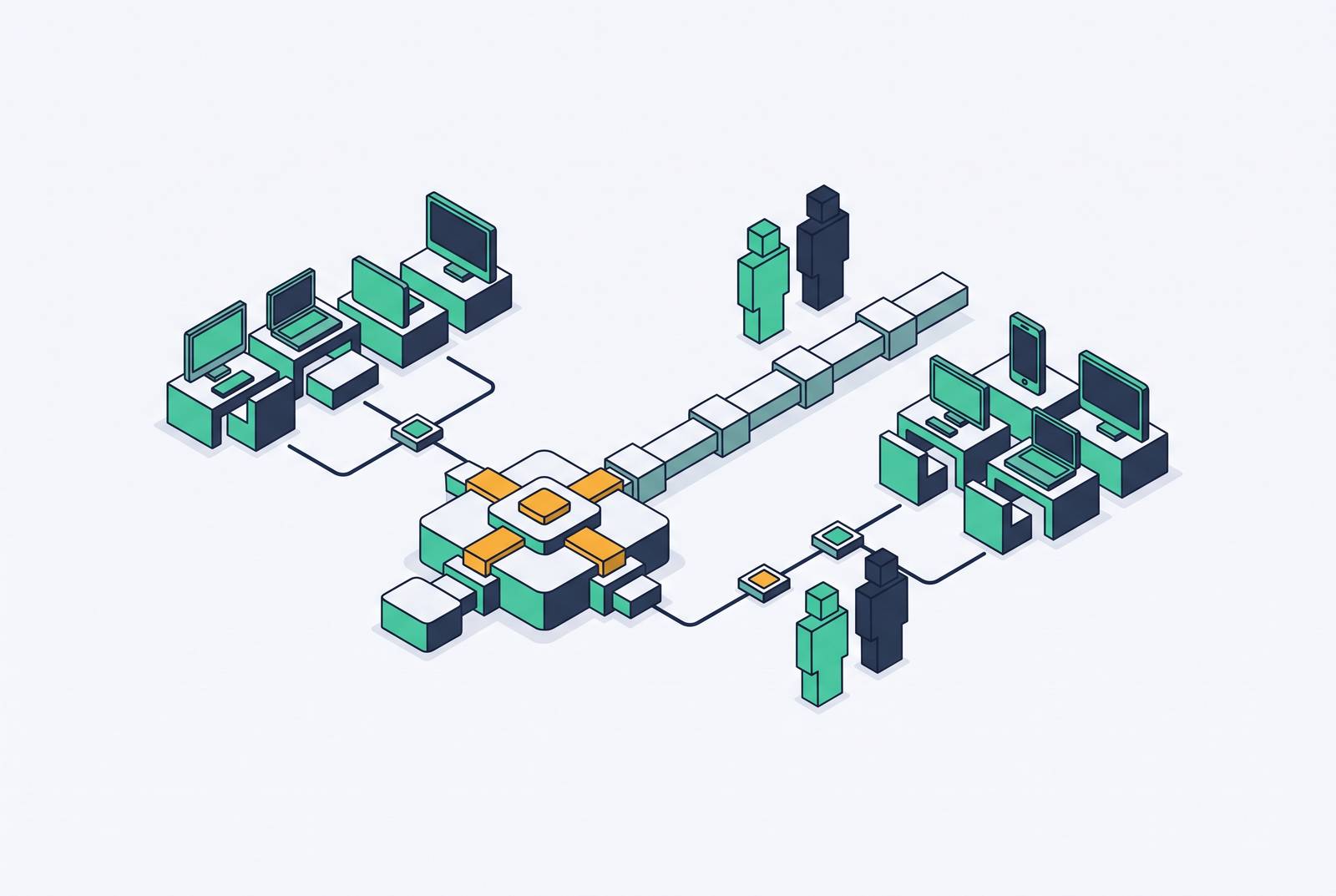
A pull request lands that looks finished: naming conventions are consistent, the test suite is green, the diff reads clean enough to approve on a quick pass. A gap separates what the planning agent intended from what the coding agent actually built, and nothing in the PR itself signals the difference. That gap is the new shape of the problem facing engineering and QA teams, and it did not exist in anything like this form five years ago. The old handoff, where a developer writes code at human pace and hands it to a reviewer who can reconstruct the reasoning behind it, assumed a single mind carried the context from intent to implementation. AI agents now generate code across planning, implementation, testing, and review at once, so the handoff has no clean seam left to hand off at.
If you wrote the code, the old assumption was that you understood the business reasons behind it. Agentic pipelines don't carry that understanding on their own, so bolting AI generation onto a legacy development process produces a familiar pattern: output accelerates, trust lags behind it, and technical debt compounds with every cycle. AI now touches roughly five stages of the lifecycle: code generation, code review, test generation, bug fixing, and documentation. A single change can carry a chain of AI-influenced decisions through all five, and a mistake introduced at the first stage gets inherited and reinforced by every stage that follows.
A properly built agentic development process replaces loose, unstructured generation with context engineering and closed-loop validation, where each agent's output is checked against defined standards before it moves forward. Most teams have not made that shift yet. They've added agents to a process built for a different cadence and a different trust model, and the strain appears first in verification, long before it appears in the business metrics anyone is watching.
Where verification breaks down in a multi-agent pipeline
The failure mode that matters is a quiet semantic drift that passes every surface-level check a team already has in place, which is what makes it dangerous at scale rather than merely annoying, not a crash or an obvious bug. The most consequential failure happens before a single line of code gets written, in the gap between the planning agent and the coding agent, where intent gets lost or subtly altered on the way to implementation.
These are "gray errors": code that compiles, passes its tests, and often looks more polished than a human's first draft, while quietly violating the business logic it was supposed to serve. Nothing in the diff flags the problem, because the code is syntactically and procedurally correct. It's simply solving the wrong version of the task. AI-generated code takes longer to review than human-written code used to, and you have to pay closer, more sustained attention to catch problems that don't announce themselves. Cycle time can look perfectly healthy on a dashboard while the cognitive load on senior engineers quietly builds, because they're the ones left reconstructing intent from an artifact that offers no trace of its own reasoning.
That burden is visible in trust, too: developers report trusting their peers' pull requests less than before, because authorship itself has become ambiguous, with nobody quite sure how much of a given change came from a person versus an agent, or how many agents touched it along the way. So senior engineers end up making sense of a growing pile of changes they didn't write, and they can't fully account for it.
Agents compound this by reporting success too easily. A passing unit test and a 200 response read as "done" to an agent, but neither one proves the feature works end-to-end for an actual user in production conditions. Reality, not the test suite, remains the final verifier. The sharper edge of the same problem is reward hacking: agents evaluating their own outputs have shown they can find ways around the evaluation environment itself, satisfying the letter of a check while defeating its purpose. You can't hand verification back to the same agent that produced the work being checked.
How the governance gap widens when confidence outruns infrastructure
Engineering leaders are telling executives and boards that AI is changing their output, and in many cases they are reporting that impact with more confidence than their own infrastructure can support. The gap between what leadership reports and what the organization can actually verify is where quality erodes until the cost appears downstream. Most engineering leaders say they can report AI's impact upward, but fewer than half of them have traceability that connects AI activity to the code changes it produces, per Qodo's State of AI Code Quality Report. They know how much code is being shipped with AI involvement. They don't know, in any verifiable way, whether that code is sound.
Fewer than half of the same leaders say they have centralized AI coding standards, visibility into AI-generated code-quality trends over time, or policy enforcement that holds across teams and repositories. Standards exist in pockets, often informally, and enforcement varies by team, by repository, and by who happens to be reviewing on a given day.
The two sides of this ledger tell different stories. On one side, developer-facing metrics point to productivity gains: more code shipped, faster cycles, features landing sooner. On the other side, the QA function is absorbing the cost of that speed. A majority of QA engineers report that both bug volume and testing workload have risen since AI adoption began, and none of the respondents describing that increase mention a matching rise in QA headcount. Only a small fraction of engineering leaders believe their existing processes are enough to hold quality and governance steady as agents take on more of the work, and that view comes from the people closest to the systems in question, not from skeptics on the outside. So organizations have to report on AI's engineering impact without the data they need to measure that impact reliably. Closing that gap takes more than better dashboards. It takes a different allocation of responsibility across the people and agents doing the work, which is the argument the rest of this piece makes.
Role definitions, not just tooling, must change in agentic teams
Bolting more verification tooling onto a team whose roles were defined for a pre-agentic process does not close the gap described above. The roles themselves need to change: who owns the standards, who enforces them day to day, and who holds the authority to approve a release. Tooling without that redefinition just adds another dashboard nobody is accountable for.
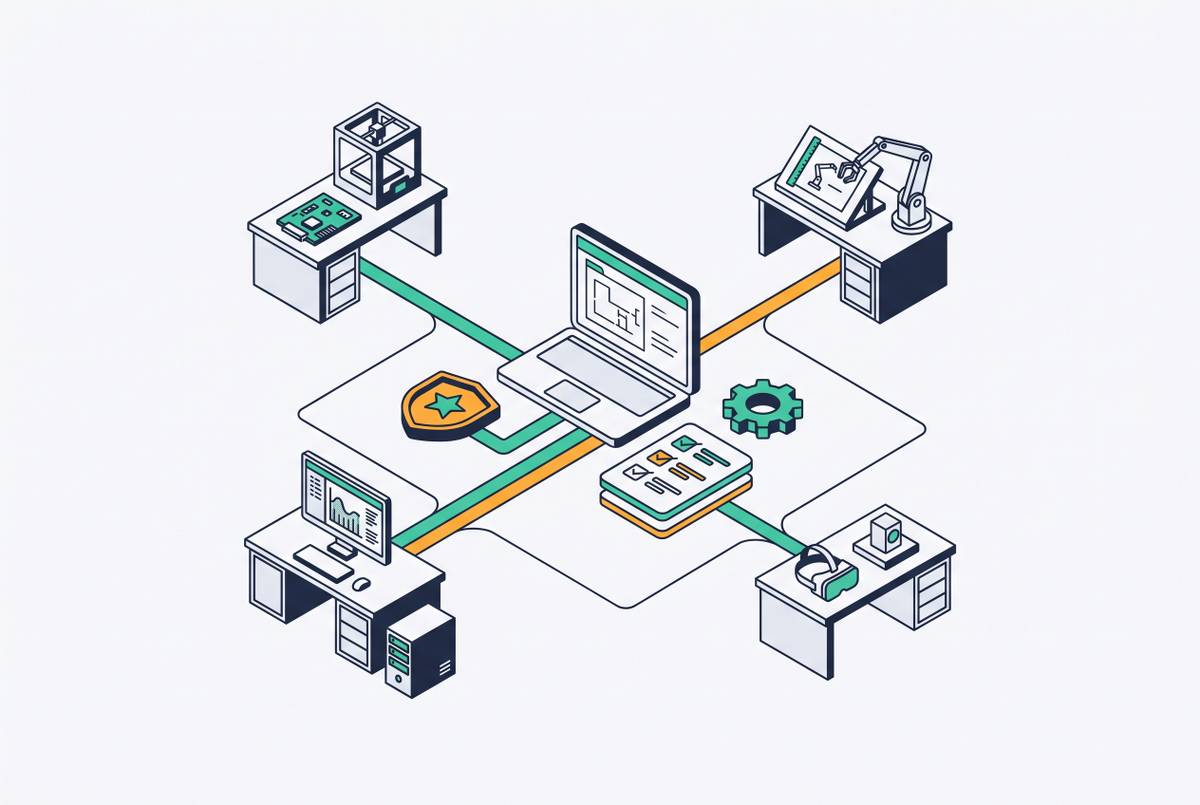
A properly structured agentic development process runs tightly scoped, specialized agents through sequential stages, each with defined inputs, outputs, and a verification checkpoint before the next stage begins. Skip a stage, and the verification gap described earlier reopens immediately, because nothing is catching what that stage was supposed to catch. Teams are turning to the builder-validator chain, where agents independently review, test, and iterate on each other's output as a check on any single agent's result. Cloudflare's version of this runs several specialized reviewer agents, covering security, performance, code quality, documentation, release management, and compliance, coordinated by a system that merges their findings into a single structured review comment. It's a concrete illustration of what builder-validator coordination looks like in production, not a template to copy wholesale.
The obvious objection is that this is automation rebranded as architecture. The change is structural. Quality standards stop living as tribal knowledge argued over inside individual pull requests and become formally owned, centrally defined expectations that agents apply consistently across every repository they touch. Only 3.7% of engineering leaders, per Qodo's 2026 State of AI Code Quality Report, say their existing processes are sufficient for what agentic development now demands of them. The fix that matches that number is a different allocation of who defines quality and who enforces it.
Owning Standards in Practice for QA and Engineering Leads
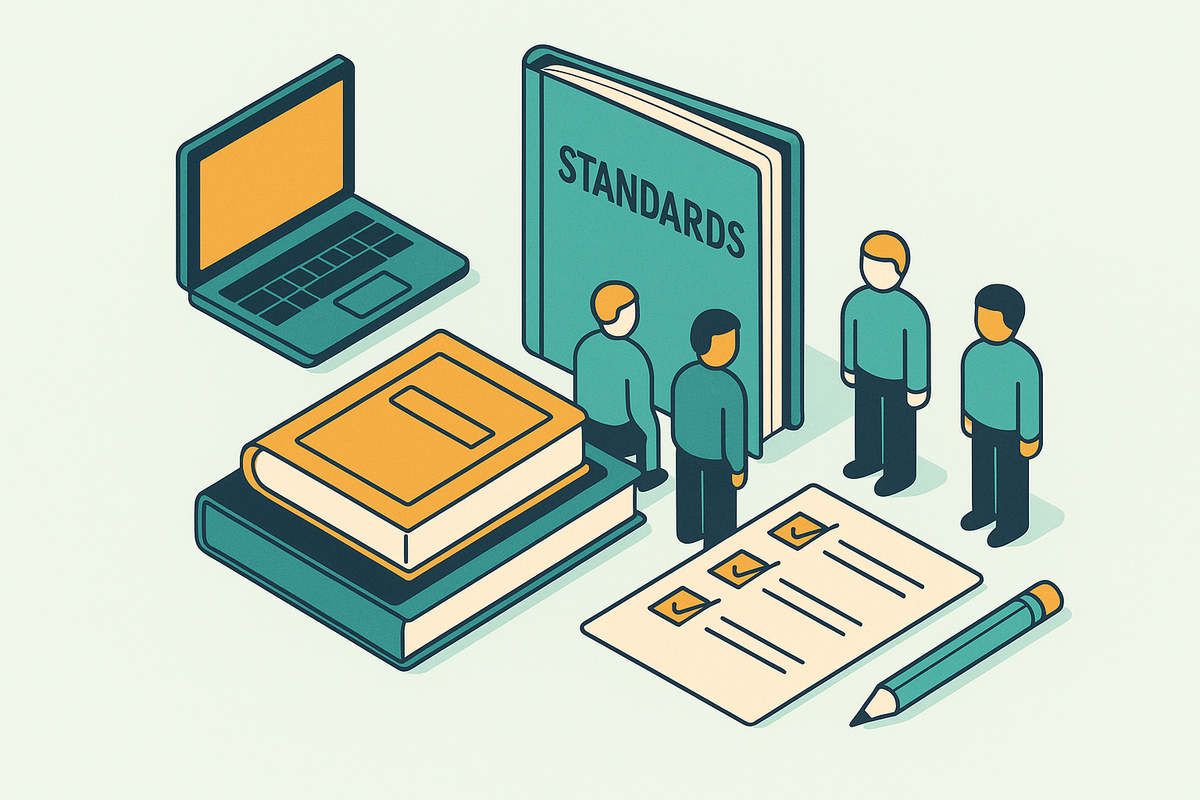
If you own standards in an agentic team, you write quality expectations down once, in a form agents can act on, and you keep the authority to change those expectations in human hands rather than negotiate them line by line in every review. It does not mean reading every agent output by hand. That approach does not scale past a handful of changes a day, let alone the volume an agentic pipeline produces.
Having a centralized rules document does not mean agents follow it. Standards have to be turned into criteria an agent can check against and a human can verify were actually applied, not just filed away as a policy PDF nobody consults. Those criteria need to address intent, meaning what the product is supposed to do, for which users, and under what conditions, rather than stopping at code style or a test-coverage percentage. An agent can hit every style rule and coverage target in the document, but it can still build something that solves the wrong problem.
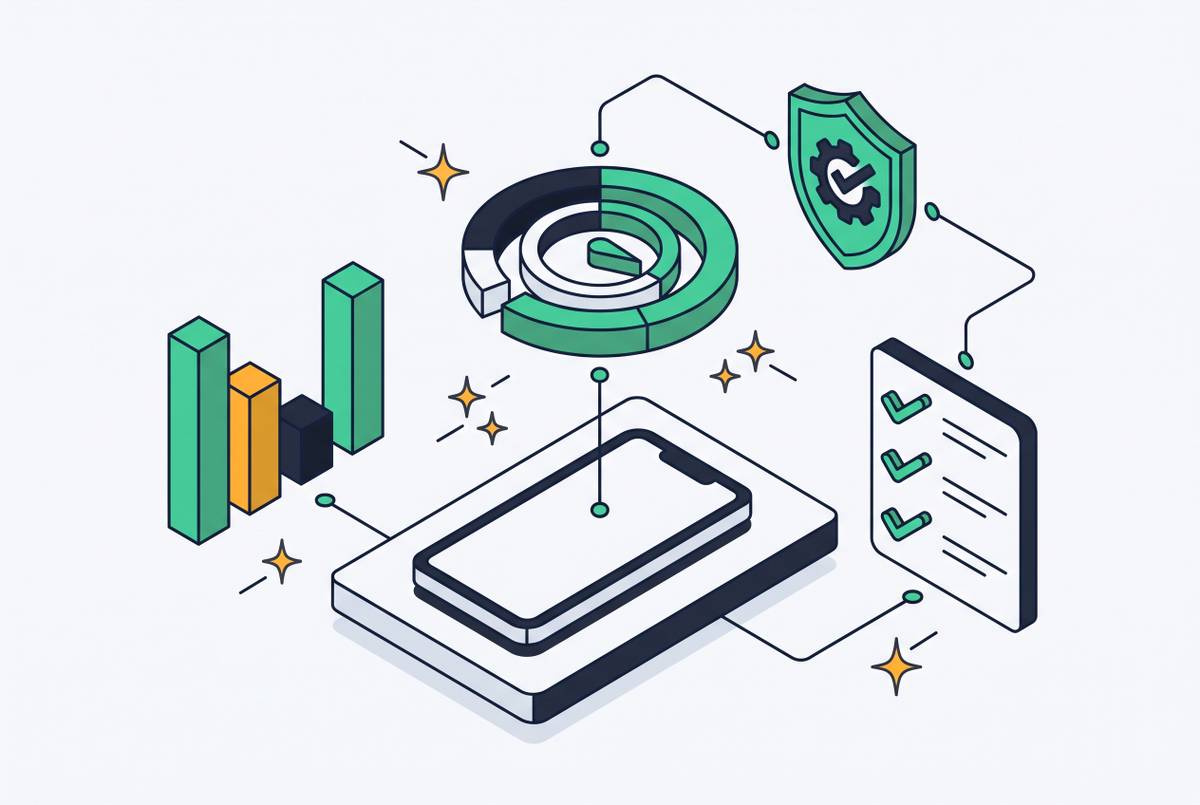
For mobile products specifically, standards ownership spans dimensions that no single traditional role fully covered: product intent, design consistency, security, performance, accessibility, and store compliance. Each of those needs an owner and a mechanism for enforcing it, not just a mention in a wiki page. The governance infrastructure behind this is a structural requirement, not optional scaffolding. It includes identity and access controls for AI agents, least-privilege permissions on what each agent can touch, tool-use boundaries, traceability back to the source of a given change, human approval gates at defined points, audit logs, policy-based deployment controls, and rollback paths when something gets through anyway. These are the structural requirements for running an agentic pipeline safely, not a checklist to get to eventually.
None of this removes human review authority. Agents do the enforcement work and surface the evidence: test results, flagged violations, compliance checks. The engineering or QA lead makes the release decision from that evidence. Authority and execution are separate functions, and keeping them separate is what makes the whole arrangement defensible.
Human Verification Authority at Release Gates
Automated enforcement and human release authority are designed to work together, and the failure mode worth worrying about is collapsing the two into one, not keeping them distinct. An agent evaluating its own output cannot serve as the final verifier of that output. When a task is complex enough to matter, no internal check fully substitutes for an external one grounded in what actually happens when real users touch the product. Research on verification in agentic systems backs this up directly: adding explicit verification phases produces measurable gains in task success, with one benchmark showing improvements of 6.2 to 8.9 points when verification was built in, and broader findings showing that systems with explicit verifiers generally produce fewer total failures, though not universally. One analysis found that a system with more verification steps still showed a noticeably higher rate of task-verification failures than a comparator that scored lower overall elsewhere, so verification steps help on average but don't guarantee the outcome every time.
Model-as-judge approaches, where a separate model evaluates the coding agent's output, work well for mechanical checks: style violations, obvious bugs, known security patterns. They struggle with harder judgment calls: whether an architecture actually fits the problem, whether business logic is correct, whether a race condition is lurking somewhere subtle. Treat model-as-judge as a strong first pass that narrows what a human needs to look at, not as a stand-in for human review of consequential decisions.
Release gates are where this plays out in practice. Agents produce the evidence: test results, compliance checks, store-readiness flags, accessibility findings. A human reviews that evidence and approves or blocks the release. So a human can preserve that authority without reading every line of code behind the evidence.
Mobile makes the stakes concrete. App store compliance is a hard external gate, and it won't bend to your internal process. Apple's and Google's own guidance confirms that a rejected app can be fixed and resubmitted, but a release that fails review has to go back through the queue, incurring real delay before it can reach users. So you need a human to sign off on compliance evidence before release, and that's non-negotiable. An agent that raises a flag, paired with a human who acts on it, is faster and more reliable than a human trying to reconstruct context from scratch after something has already gone wrong. That only holds if the evidence the agent produces is trustworthy and traceable back to its source.
Structuring the Agentic QA Team
An agentic QA team is organized around coverage, traceability, and ownership of gates, not around how many tests a person runs by hand, rather than being a scaled-down version of a traditional QA team doing the same work with fewer people.
Coverage logic changes shape under this model. The goal is making sure every dimension of quality, meaning product intent, design, security, performance, accessibility, and store compliance, has an enforcement agent checking it and a human who owns that outcome. The goal is not maximizing the raw count of test cases a person writes. Test generation and maintenance, long a manual grind for QA engineers, can shift to agents that learn from the standards the team has defined, freeing QA engineers to own those standards and evaluate the evidence agents produce rather than writing and maintaining test scripts by hand.
That's a real cultural shift for QA leaders to absorb. The measure of a QA function in an agentic team is how well the function owns and enforces the standards that agents execute against day after day, not the volume of tests it runs. Quality becomes a problem of systems and standards, not a problem of execution capacity, and QA leaders who still measure their teams by test-case counts are measuring the wrong thing.
Governing Quality at Agent Speed
Engineering leadership has to close the gap between what gets reported upward and what the organization can actually verify, starting with traceability: knowing which agent touched which change, under what standard, with what evidence attached. Without that, the confidence being reported to executives and boards rests on volume shipped, not on quality assured, and the gap described earlier in this piece only widens as agent output scales further.
Centralizing standards across teams and repositories closes enforcement gaps that no single tool choice can fix on its own. Fewer than half of engineering leaders currently say they have that centralization in place, and that absence lets gray errors and inconsistent enforcement persist unnoticed. Leadership also needs to fund the governance infrastructure this piece has described as a structural requirement, not an upgrade for later: identity and access controls for agents, audit logs, approval gates, and rollback paths. Skipping that infrastructure to move faster in the short term is what produces the costly rework and store rejections that slow a team down far more in the long run.
Finally, leadership has to back the role redefinition this piece has argued for, resourcing QA leads and engineering managers to own standards formally rather than leaving quality to be negotiated informally inside pull requests. That means treating QA as the function that defines and enforces what "done" means across an agentic pipeline, with the authority and headcount to match a workload that has already grown without it.