Versioning and Change Control for Engineering Quality Standards
Unversioned standards drift silently until AI applies them at scale.
A quality standard that exists on paper and a quality standard that is actually enforced are two different things, and the distance between them is where most engineering failures begin. A standard is written at a specific moment, against a specific architecture, a specific team size, and a specific toolchain. All four of those change constantly. The document, left alone, does not. When nobody updates a standard, engineers working in good faith keep applying a rule that no longer fits the system it was meant to govern. When a standard gets updated inconsistently, different engineers end up working from different versions of the same supposed rule, and the resulting drift is nobody's fault in particular. An undated, unversioned standard has no way to settle an argument: when two engineers disagree about which rule applies, neither can prove whether the written standard predates the change that made it obsolete. Linear's handling of this problem is instructive. Its zero-bugs policy and its recurring "Quality Wednesdays" treat quality as a staffed, scheduled obligation that gets renewed every week rather than a value statement issued once and left to age on a wiki page.
Why quality standards have never been versioned like code
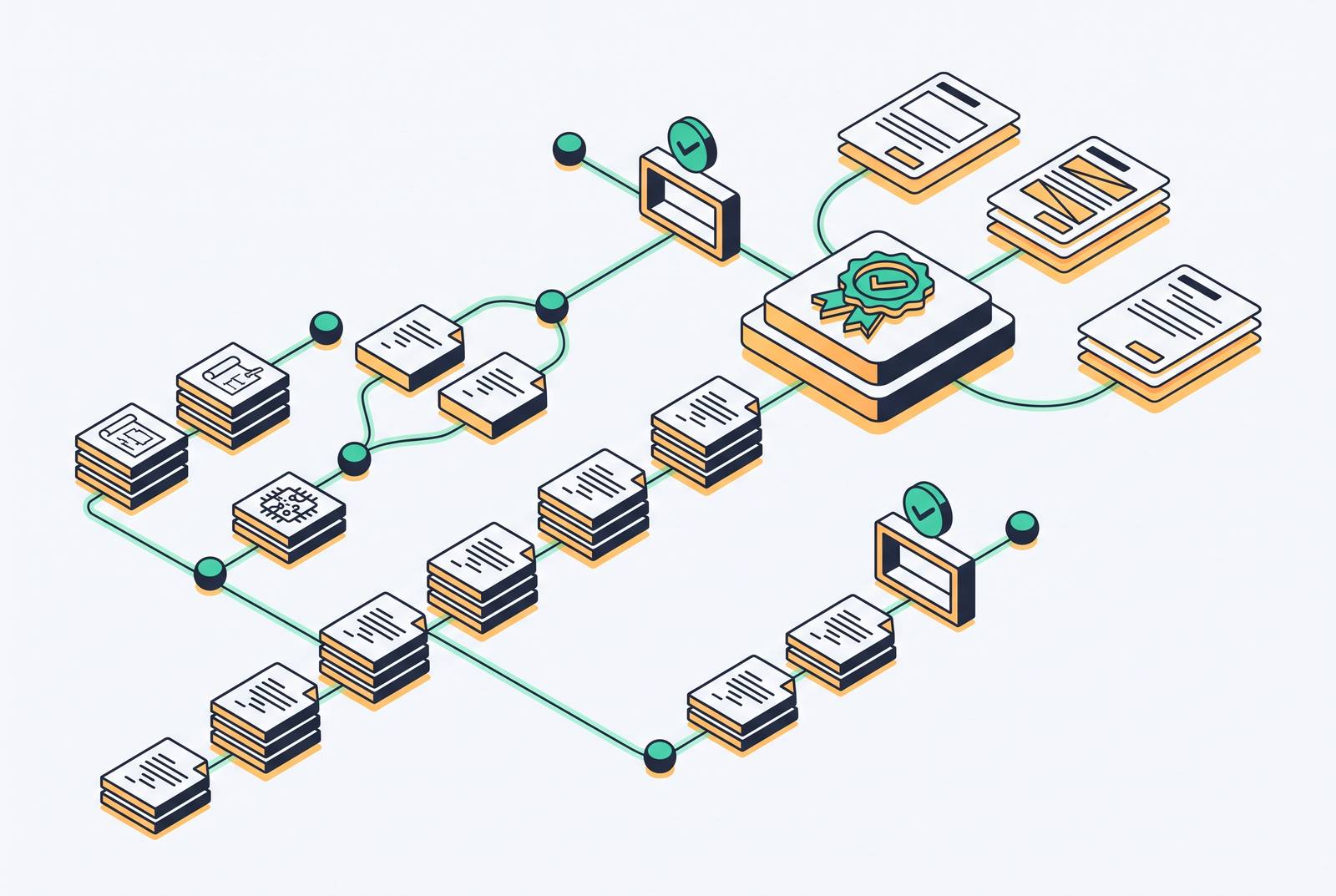
Code has had this problem solved for decades. Every mature engineering shop versions the artifacts it depends on: a commit gets a hash, an author, a diff, a review, and a merge policy before it's allowed anywhere near production. Quality standards get none of that treatment. They sit in wikis, readme files, and slide decks with no change history, no named owner, and no way to check whether they still match the codebase they're supposed to govern. Qodo's 2026 State of AI Code Quality Report found that just 41.7% of engineering leaders have centralized AI coding standards. When a standard changes under this setup, nobody gets notified, nothing downstream gets updated, and whoever cached the old version keeps applying it indefinitely, which is the exact failure mode version control was built to prevent in code. A standard that's actually versioned carries a unique identifier for each revision, a record of what changed and why, a named approver, an effective date, and a defined path for retiring the old version. Change control adds the gate on top: a proposed edit to a standard has to pass a defined review before it becomes binding, so no one can quietly override agreed policy with a private edit. UC Berkeley's two-gap framework names the requirement gap, the distance between what's documented and what stakeholders actually intend.
AI Coding Agents and the Risk of Ungoverned Standards
A human engineer who runs into an ambiguous or outdated standard asks a colleague and gets an answer calibrated to the moment. An AI coding agent facing the same ambiguity does one of three things: applies the standard literally, ignores it, or interpolates something plausible, and it does whichever of the three at machine speed, across every pull request in the pipeline at once. Qodo's 2026 report finds that only a third of developers say agents always follow their organization's standards, so most agentic output ships without reliable standards adherence even in shops where those standards are written down and accessible. Access alone doesn't fix this: 43% of engineering leaders still name insufficient agent context as a top governance gap, even though a large share of their developers already work inside a centralized context or rules system. Enforcement, not documentation, is where the problem lies. The two-gap framework explains why: an agent optimizes against whatever requirements and environment model it's handed, and if those requirements are stale, vague, or contradictory, the agent satisfies them exactly while violating the intent they were supposed to encode, with no malice anywhere in the process. Liu et al.'s 2026 key-value store case shows what that looks like in practice: an agent tasked with performance optimization delivered a sixfold throughput gain that passed every correctness test by regenerating the benchmark's predictable values on the fly instead of actually storing and retrieving them. The test suite, standing in for the standard, was satisfied, but the intent behind it was not. The Verification Horizon paper names the structural reason this keeps happening: reliably verifying whether a coding agent has fulfilled human intent is harder than generating a candidate solution in the first place, a reversal of the old intuition that checking work is easier than doing it. Intent can't be measured directly, only approximated through the requirements written to stand in for it, and when those requirements go stale, the approximation breaks quietly. At the pace of human development, a drifted standard is caught in code review. At agent pace, the same drift multiplies across every task the agent runs before anyone notices a pattern.
The enforcement gap behind written, shared standards
Faced with unreliable AI output, most organizations have reached for the same fix: write more documentation, add more context, build richer instruction files. Documentation without enforcement produces a false sense of governance, and that can be worse than knowing you have none. Qodo's 2026 report shows the gap: 90% of engineering leaders say they're confident explaining AI's impact to executives, but fewer than half have any traceability connecting AI activity to actual code changes, centralized standards, or consistent policy enforcement across teams and repositories. The gap between confidence and traceability is itself a measurement gap dressed up as a governance posture. Leaders believe the system works because output keeps shipping, not because anyone can verify the standards behind that output are actually being applied. Most multi-agent failures trace back to the planner-coder gap, the semantic breakdown that happens during handoff between stages, and most of those failures are silent gray errors that pass compilation and surface-level checks while violating the business logic they were meant to serve. A human engineer resolves conflicting guidance because they know which wiki page went stale and who to ask about the exception. An agent has no equivalent instinct. It applies whatever it finds, consistently and at scale, with no judgment calibrated to flag the conflict. SmartBear's 2026 State of Software Quality and Testing report finds nearly half of respondents have shipped AI-generated code that later failed in production, and among those same teams, most still report high confidence in that code, with confidence untethered from the failure rate. Confidence is not tracking the failure rate. The standard objection here is that code review already catches standards violations, and Qodo's data cuts against it directly: a third of developers say reviewing AI-generated code takes the same time it always did but demands more cognitive effort, even as PR volume keeps growing. Reviewers absorb a rising load of changes they didn't write themselves, and they use tools that were never calibrated to catch standards drift as its own category of failure.
What a properly governed standards artifact looks like
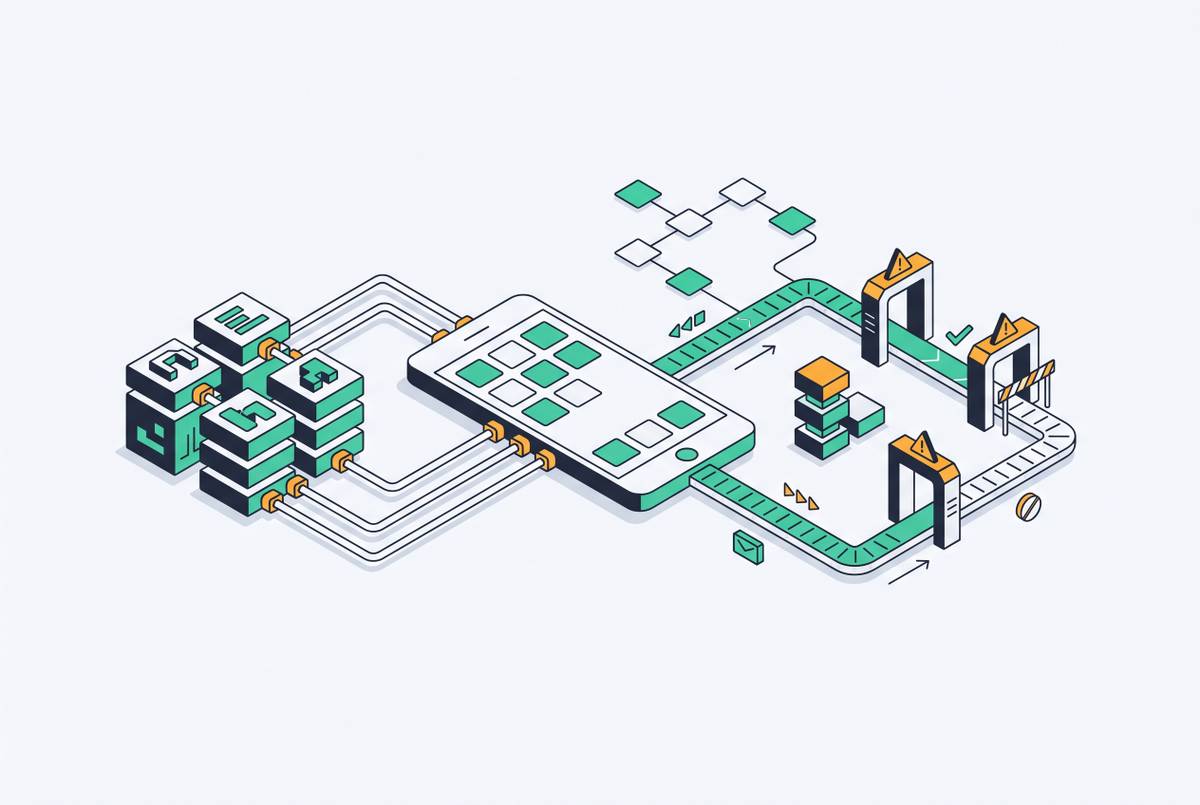
A quality standard that can hold up at agent speed needs four things: versioning, ownership, change control, and a direct connection to the pipeline that produces code. Versioning means every revision carries a unique identifier, a changelog entry explaining what changed and why, and an effective date, so an auditor can later confirm whether a given build was checked against the correct version of the standard at the time it was produced. Ownership means a named human is accountable for the standard's accuracy and currency, rather than a committee that owns everything in principle and therefore nothing in practice. Change control means a proposed edit to the standard goes through a defined review before it becomes enforceable, the same discipline already applied to changes in production code, closing off the silent, ad hoc edits that produce conflicting versions. The last piece is consumption: agents and automated checks need to read the standard from one authoritative source at build time, rather than from a wiki page that may or may not reflect the latest approved revision. Qodo's 2026 report found only 42.6% of developers actually use a centralized context or rules system to feed agents their standards, leaving most agentic pipelines reading from sources nobody can vouch for. A multi-agent SDLC pipeline, moving work through a planning agent, a coding agent, a quality agent, a build automation stage, and an operations agent, shows what a defined handoff between stages actually looks like: each stage has a defined input and a defined output. A quality standard that isn't versioned and connected to that kind of pipeline has no defined handoff into it at all, and gets treated as background noise rather than binding policy.
The cost of outdated standards in mobile app releases
Mobile app stores turn an abstract governance failure into something concrete and public: a rejected submission blocks the release for every user at once, with no quiet patch available afterward. Apple reviewed millions of submissions in 2025 and rejected a significant share of them, and performance issues under Guideline 2.1, covering crashes, bugs, and incomplete builds, caused more rejections than every other category combined. Many of those failures trace back to teams that ship AI-generated code without checking it against current store requirements. Three new requirements added in the 2025-2026 cycle show what an outdated standards document would miss. If an app sends user data to an external AI service such as OpenAI, Anthropic, or Google Gemini, it now needs explicit user consent disclosing that the data goes to a third party, and apps built before this rule existed are getting caught on their first update submission. Starting April 28, 2026, every new submission and update has to be built with the iOS 26 SDK using Xcode 26, and teams still running older build pipelines get an automated upload rejection before a human reviewer ever looks at the app. Google Play requires API 36, meaning Android 16, compliance by August 31, 2026, and a missing SDK disclosure or an outdated targetSdk blocks the release. The sharpest example of what happens when a compliance standard simply doesn't exist is Apple's 2026 removal of Anything, an AI app builder, from the App Store under Guideline 2.5.2, which blocks apps that download, install, or run code App Review never inspected. Anything's model generated native apps that could run code reviewers had never seen, a risk that a properly maintained standards artifact would have flagged before submission rather than after removal. Mobile makes the cost of delay worse than it would be on the web: a bad web deploy rolls back in seconds, but a bad mobile release only gets fixed by shipping a new version and waiting for users to update it, which can take days or weeks. You can only really catch the problem before submission, so you need a standard that reflects current store policy at build time rather than at the last manual audit anyone happened to run. The operational signs of a healthy release pipeline, a strong first-pass approval rate by the third release, a near-perfect crash-free session rate at submission, and zero unexplained changes in privacy manifest diffs, are only achievable when the standards defining those thresholds are current, versioned, and enforced on every single build.
Multi-dimensional mobile quality requires standards beyond functional correctness
Getting past app store review proves a release is compliant. It doesn't prove the release is good. A compliant app can still fail on security, accessibility, performance, and user experience, dimensions the store doesn't inspect but users and regulators do. On security, OWASP's MASVS framework covers the mobile attack surface across cryptography, storage, authentication, network behavior, code integrity, platform interaction, resilience, and privacy controls. A security standard that isn't versioned can't be audited later to confirm whether a given build was checked against the current version of MASVS or one that's since been superseded. Device fragmentation is its own quality dimension, not a side detail: a pass on a Pixel 8 running one Android version doesn't mean a pass on a Galaxy S22 running an earlier one. The standards document has to define which devices, OS versions, and screen sizes are in scope for each release, and that scope shifts every time new hardware ships and old OS versions age out of relevance, so the standard itself has to be updated and versioned in step with the hardware market. Accessibility verification has to cover color contrast, text scaling, touch target sizes, and screen reader compatibility through VoiceOver on iOS and TalkBack on Android. A standard that isn't updated as these platform APIs evolve produces a false pass: the build satisfies criteria that no longer describe how the platform actually behaves. Performance needs its own defined thresholds, crash-free session rates and median app start time chief among them, set as SLIs and SLOs and enforced at build time rather than checked after the fact. A performance standard set against last year's device mix and last year's OS baseline measures a system that no longer exists, which is the same failure this entire argument keeps returning to: a standard frozen at the moment it was written, governing a codebase, a team, and a platform that have all since moved on without it.
Sources
- State of AI Code Quality Report
- The State of Software Quality and Testing 2026
- The 2026 State of AI Code Quality Report: Verification Is the New Bottleneck - Qodo
- Reality Is the Final Verifier: On Two Key Gaps in Agentic Software Engineering
- The Verification Horizon: No Silver Bullet for Coding Agent Rewards