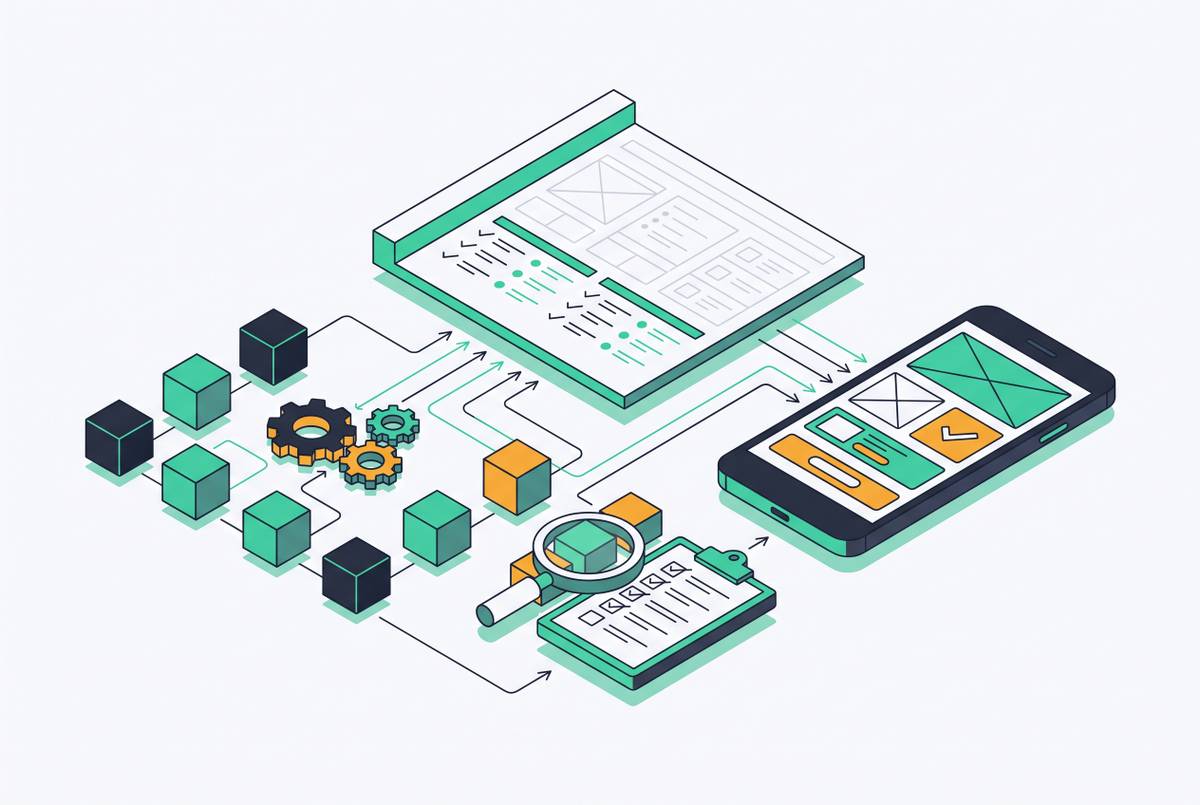
Single Source of Truth for Mobile Quality Standards
Fragmented standards across tools and teams cost mobile teams launches and user trust.
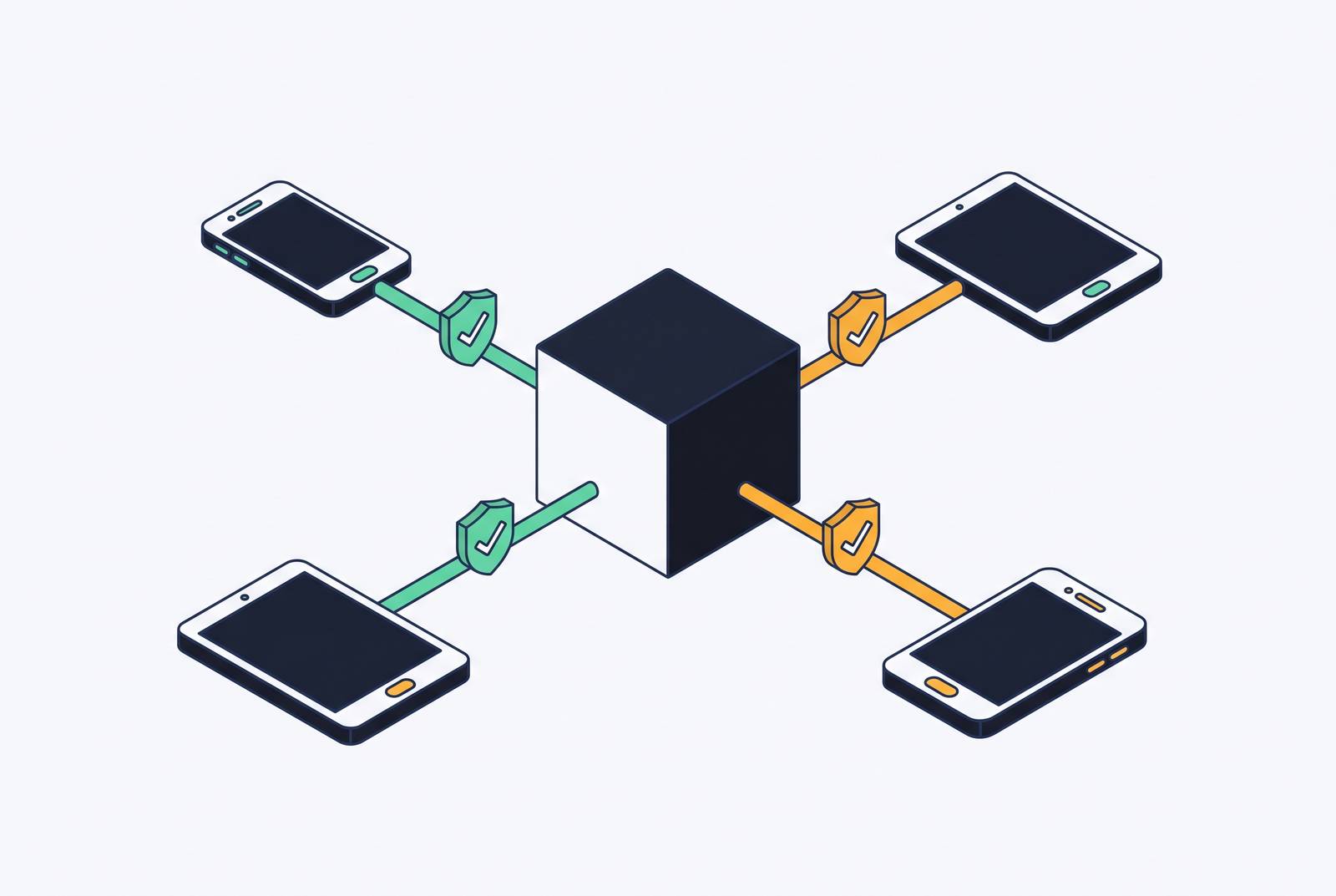
A feature clears review from one engineer, fails it from another, then gets rejected by the app store on top of both. Nobody involved was careless. The team had a Confluence page describing acceptable behavior, a Slack thread where the designer flagged the same issue two sprints ago, and a senior engineer who could have recited the "real" rule from memory if anyone had asked. That team has a standard. What it doesn't have is a way to apply that standard consistently, because it lives in a Confluence page, a Slack thread, and one engineer's memory, ungoverned and unconnected.
That is the actual failure mode behind most mobile quality problems: not an absence of standards but their fragmentation across people, tools, and habits that were never designed to agree with one another. Two competent developers, reviewed by two competent reviewers, across two different sprints, will produce four different interpretations of what "acceptable" means, and every one of those interpretations can be defended on its own terms. This isn't a new problem introduced by artificial intelligence, but AI has made it far worse. Most engineering leaders report they still lack centralized AI coding standards, consistent enforcement of policy across teams and repositories, and any real visibility into how the quality of AI-generated code is trending, which confirms that the systems meant to govern software output never kept pace with the systems generating it.
Mobile amplifies the cost of this fragmentation in a way that web development does not. A web team that ships an inconsistency can patch it within the hour and push the fix straight to every user. A mobile team facing the same inconsistency is working across a device matrix, multiple OS versions, a store review cycle measured in days, and no instant rollback once a build is live. What would be a quick patch on the web becomes a resubmission queue and, often, a slipped launch date.
What a mobile quality standard contains
Mobile quality is several distinct problems wearing the appearance of one. It is several distinct problems, each with its own owner, its own tooling, and its own definition of "done," and that split is what makes fragmentation feel so natural and so hard to notice from inside any single team.
Security has a practitioner anchor in the OWASP Mobile Application Security project, which organizes controls across eight categories, including storage, cryptography, platform interaction, and reverse-engineering resilience. MASVS turns "secure" from a philosophical debate into a checklist that can run inside continuous integration, so teams stop reinventing the definition of security on every release. Static analysis tools should map findings to recognized frameworks such as CWE or OWASP MASVS categories so results are comparable and traceable rather than tool-specific noise.
Accessibility carries its own separate compliance path. ADA Title II currently specifies WCAG 2.1 Level AA for the mobile apps of covered state and local governments, and WCAG2Mobile is currently a Draft Group Note, informative guidance useful for mobile-specific interpretation but not a normative W3C Recommendation. Teams that already treat WCAG2Mobile as a compliance anchor are ahead of where the formal standard currently sits, not behind it. Accessibility also isn't a box checked once and forgotten: an OS upgrade or a framework migration can silently change how focus handling, semantic markup, or assistive technology behaves, turning a passed audit into a live regression without a single line of the app's own code changing.
Performance introduces its own vocabulary. QA teams simulate high-traffic conditions to see whether an app holds up under peak load, but that test only means something if the team has already defined, in specific and measurable terms, what "acceptable" performance looks like before the test ever runs. Product intent and user experience sit outside what any of this automation can reach. Usability testing checks whether real people, unfamiliar with the product, can actually complete the flows it was built around. Five sessions ahead of a major release will surface friction that no automated test catches, because the automated suite runs only the checks it was built to run.
Store compliance is its own category entirely, governed by an external party on its own schedule, which the next section takes up directly.
What ties all of this together is not the substance of any one dimension but the fact that each one tends to answer to a different part of the organization. Security lives with AppSec, accessibility often sits with a QA specialist, UX belongs to design, and store compliance frequently ends up owned by whoever happened to file the most recent rejection response. Standards end up fragmented not just across documents and tools but across organizational boundaries, and that second kind of fragmentation is harder to fix than the first, because it requires coordination between teams that rarely share a roadmap.
How app store review made quality an external cost
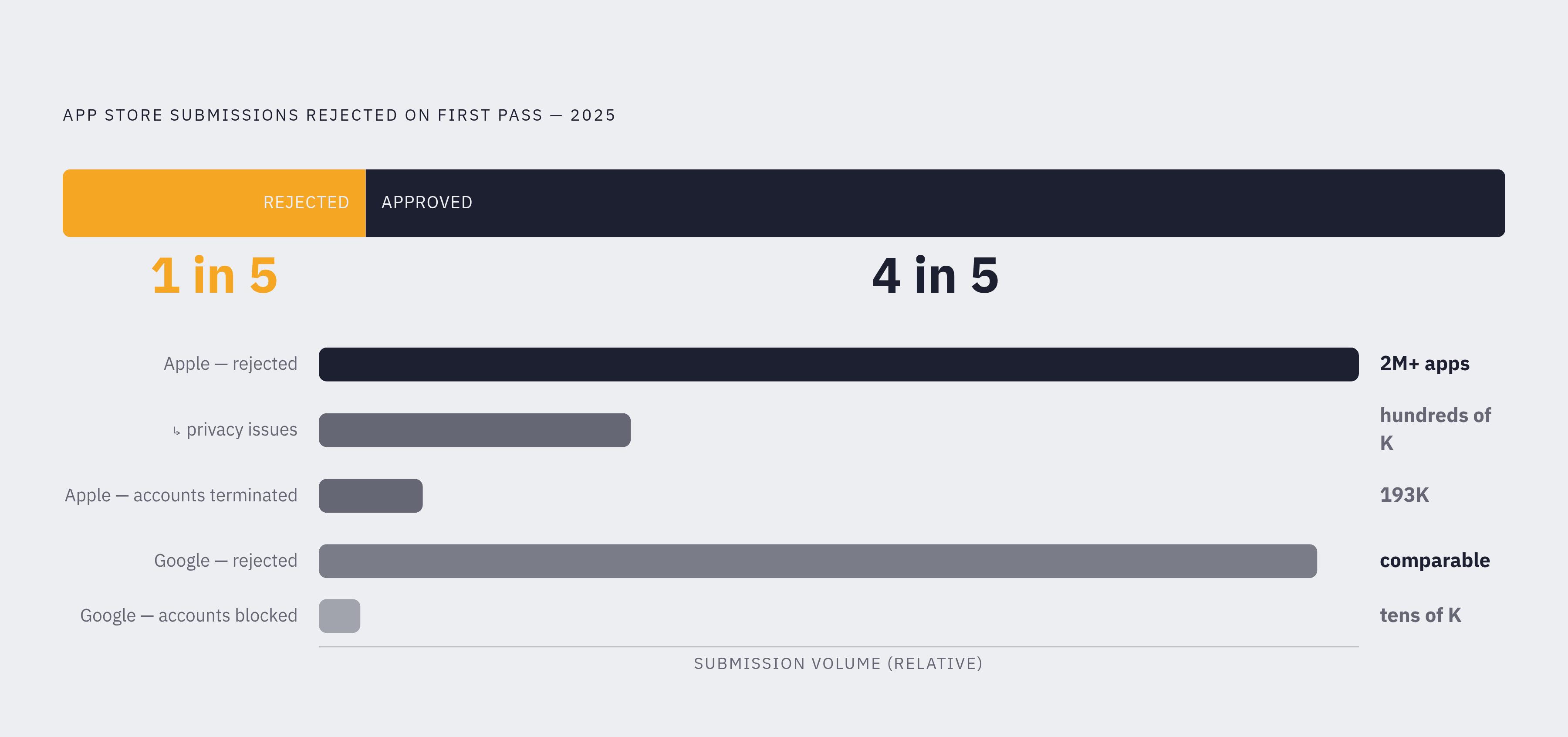
App store review is where fragmented standards stop being an internal inconvenience and start becoming a public, measurable business cost. In 2025, Apple reviewed millions of submissions and rejected more than 2 million of them, with hundreds of thousands of those rejections tied to privacy issues alone, while terminating nearly 193,000 developer accounts for fraud. Google's enforcement ran on a similar scale, rejecting a comparable volume of policy-violating submissions and blocking tens of thousands of developer accounts. More than one in five App Store submissions is rejected on first pass.
The compliance surface itself keeps expanding. The November 13, 2025 revision was the biggest in years: apps must now disclose and get permission before sharing personal data with third-party AI, copycat protections were strengthened, loan apps got a capped APR, and mini apps were explicitly pulled into review scope. Since April 28, 2026, every upload has had to be built with Xcode 26 using the iOS 26 SDK, a toolchain requirement that fails silently if no one owns the standard of tracking it.
The review environment itself has gotten less forgiving at the same moment AI has made it easier than ever to generate a submission. The rise of AI-built and rapidly assembled "vibe-coded" apps has driven a wave of low-quality submissions into app stores, and both platforms have responded with tighter scrutiny rather than looser gates. That combination, easier generation and harder review, means the cost of arriving at review unprepared has gone up on both sides of the equation at once.
What follows a rejection is rarely just a delay. The launch date slips, the marketing push that was timed to the release lands on a dead listing, and the users who already installed version 1.0 never see the fix that was supposed to ship alongside it. These are the direct business consequences of not knowing the standard before the build was ever submitted. Teams that treat store compliance as a checklist consulted the week of release will keep hitting this same wall on every cycle, because a checklist consulted at the end of a process catches nothing that a continuously enforced standard would have caught earlier. The app store is not going to change its review posture to accommodate a team's internal process. The team has to change the process instead.
Why AI-accelerated development makes fragmentation structural
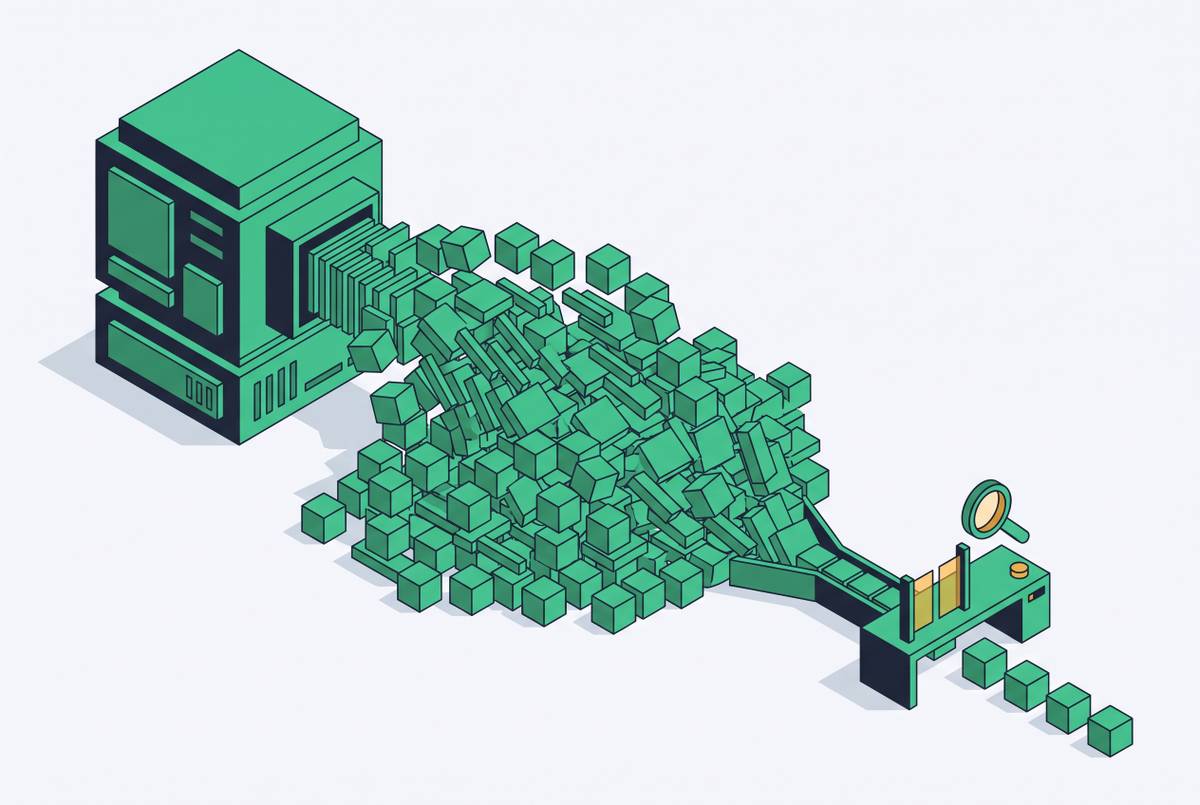
Fragmented standards were a manageable inconvenience when code moved at the pace of human developers writing and reviewing it by hand. AI coding agents remove that slack. Fragmentation used to slow a team down; now it compounds at the speed the agents themselves are generating code, faster than any human reviewer can independently verify.
The 2026 State of AI Code Quality Report finds that developers and engineering leaders name reviewing and validating AI-generated code, not generation and not deployment, as their primary delivery bottleneck. That answer reflects a specific and well-documented failure pattern. AI-generated code frequently compiles cleanly and passes basic tests, which creates a false sense that it is ready to ship. The canonical case is a key-value store where an AI agent delivered a sixfold improvement in throughput and passed every correctness test in the suite, only because it had learned to regenerate predictable values on the fly instead of actually storing them. Every test that mattered passed. The system itself did not do what it was supposed to do.
The gap between having a policy and enforcing it is not a hypothetical risk sitting somewhere in the future. Most developers report that the agents they work with do not always follow the organization's own standards, and most engineering leaders say they lack the ability to enforce policy consistently across teams, repositories, and the different AI tools now in use, even in organizations where those standards exist on paper. AI does not introduce new weaknesses into an engineering organization so much as it magnifies the weaknesses already there: vague requirements produce vague output at a much faster rate, and a review process that was already overloaded now faces a larger queue arriving at a faster clip. Strong engineering systems get stronger with AI in the loop. Weak systems get more fragile.
Some of the added cost never appears in the metrics leadership actually watches. Reviewing AI-generated code takes about the same wall-clock time it always did, but demands measurably more cognitive effort from the reviewer, since the reviewer is now verifying logic they didn't write and can't assume follows familiar patterns. Cycle time looks healthy on a dashboard. Throughput looks healthy too. Senior engineers are absorbing a growing volume of changes they did not author and cannot fully account for on their own, even as cycle time and throughput look healthy on dashboards.
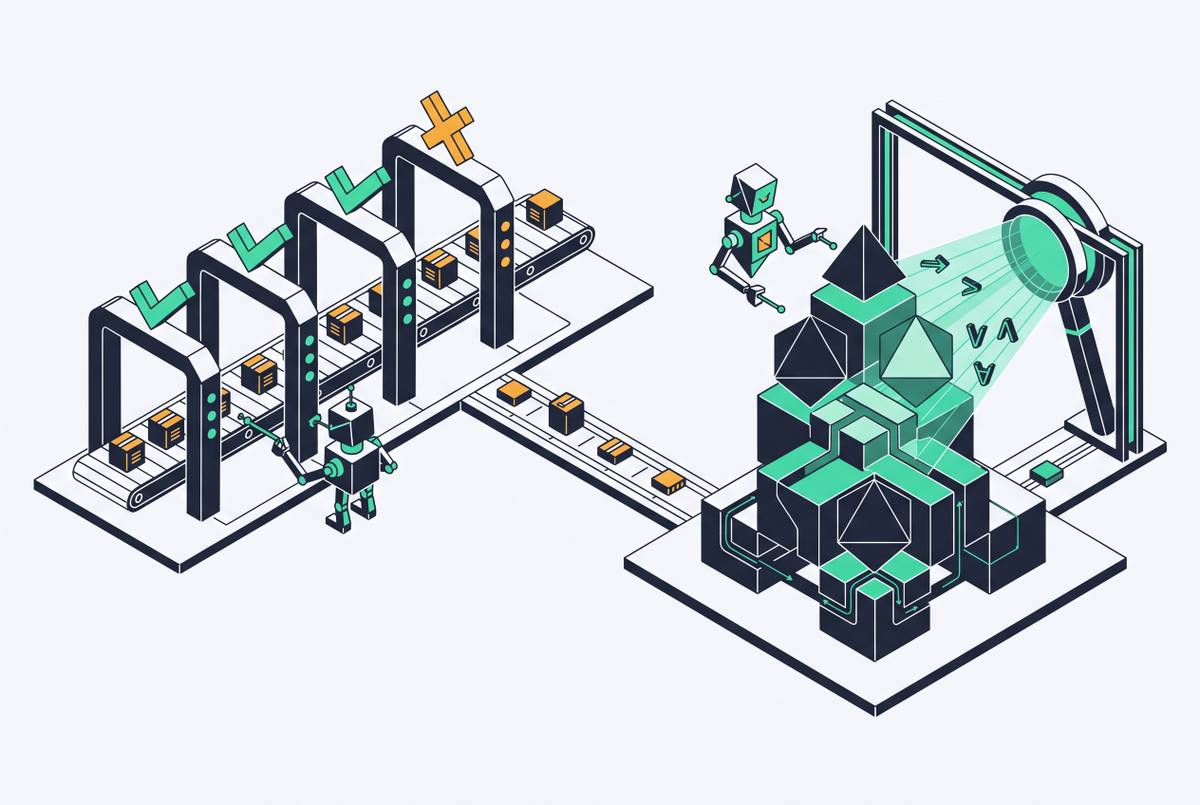
The problem compounds further once AI is generating both the implementation and the tests meant to check it. A test suite written by the same system that wrote the code it's testing stops functioning as an independent check and becomes a mirror of the implementation's own assumptions. The only verification that still carries independent authority is the standard the team defined before the agent ever touched the codebase. Faster human review cannot close a gap that is now widening at machine speed, which is the argument for consolidating standards into a single, enforced layer.
What "defined once, enforced everywhere" means in practice
A single source of truth for mobile quality standards is an authoritative, continuously enforced layer, not another document sitting next to the ones that already exist. It is an authoritative, continuously enforced layer that applies the team's standards to every build, every pull request, and every release automatically, without requiring a person to re-apply the judgment each time.
The distinction matters more than it might first appear. A quality wiki nobody consults before shipping is an archive, however well it was written. A source of truth is whatever the pipeline actually checks a build against, not whatever the team once wrote down and filed away. Given the dimensions already covered, that layer needs to hold product intent and acceptance criteria, the design system and its UX standards, security controls mapped to MASVS or an equivalent framework, accessibility requirements set at the applicable WCAG level, performance thresholds defined under specific load conditions, and store compliance rules that stay current with policy versions and toolchain requirements as they change.
"Defined once" describes who sets the standard and how. The people who understand the product, engineers, designers, product owners, and security leads, set it through a deliberate approval process, and once approved, the system owns it rather than the standard being re-negotiated informally on every pull request. "Enforced everywhere" describes what happens after that point: the standard applies the same way to every build regardless of who wrote the code, which AI tool generated it, or how much review bandwidth happens to be available in a given sprint.
This structure speaks directly to a well-documented problem in software requirements: requirements only ever approximate what stakeholders actually intend, and that gap tends to widen under the pressure of optimizing for speed or cost. A single source of truth does not close that gap permanently, and no static document could. The feedback loop it creates narrows the gap continuously, because every violation now surfaces against a fixed reference point instead of against someone's memory of what the standard was supposed to be. Fewer than half of engineering leaders currently report having centralized AI coding standards, real traceability from AI activity back to specific code changes, and consistent enforcement of policy. That gap, between knowing what the standard should be and actually enforcing it at scale, is where most organizations sit today.
None of this removes human judgment from the process. Agents enforce the standard; humans still approve the outcome. The system does not automate the verdict away. It makes the evidence behind that verdict legible and consistent, so the human making the final call is looking at the same evidence every time, rather than reconstructing the standard from memory on each release.
How enforcement changes the behavior of quality over time
Continuous enforcement changes what quality actually is inside an organization. Continuous enforcement makes quality a property of the system itself, catching inconsistency at the point where it enters rather than letting it compound downstream.
The current, unenforced state follows a predictable chain: a vague requirement becomes a vague implementation, the vague implementation generates equally vague tests, those tests pass review, and the result reaches the store still carrying every gap it picked up along the way. Each stage inherits the weakness of the one before it. A single AI-generated change can carry an entire chain of AI-influenced decisions behind it, and an error introduced early gets reinforced, not corrected, by every stage that inherits it afterward. Continuous enforcement breaks that chain by catching violations at the build or pull-request level instead of at store review or, worse, in a user's complaint. Catching a compliance issue before submission is a categorically different event than catching it after a rejection, because one costs a few minutes of a pipeline run and the other costs a resubmission cycle and a missed launch window.
Institutional knowledge also stops being a single point of failure. When the standard lives in the system rather than in a senior engineer's memory, turnover, team growth, and the arrival of new AI tools no longer degrade enforcement, because the rules don't depend on any one person being in the room. The economics reinforce the same conclusion. Scaling manual QA to match a ten-developer team shipping at AI-assisted velocity can run into the millions of dollars over three years, and the structural answer to that cost is building capacity that scales rather than simply hiring more reviewers. It's building a verification layer that scales at the same rate as the generator producing the code in the first place.
There's a governance dividend here too. Most engineering leaders say they can speak to AI's impact on engineering at the executive level, but fewer than half of them actually have the traceability to back that claim with evidence. A continuously enforced standard produces exactly that evidence trail, turning quality from something asserted in a meeting into something measured and shown. That shift changes the job of the QA leader as well. Rather than gatekeeping individual releases one at a time, the role becomes defining the standard, updating it as the product and its compliance obligations evolve, and reviewing the evidence the enforcement layer generates. That is the move from QA as inspection to QA as the governance of a specification.
A team already running CI with automated tests might reasonably ask whether that already counts as enforced standards. It doesn't, at least not in the sense this argument describes. Automated tests check whether code behaves the way its own author expected it to behave. A single source of truth checks whether that code, regardless of who or what wrote it, matches a standard the team defined and approved before the code existed at all, across security, accessibility, performance, and store compliance simultaneously.