Rollback Triggers and Incident Thresholds for Mobile App Releases
Define rollback triggers and thresholds before mobile releases ship, not during incidents.
Mobile rollback triggers and incident thresholds serve one purpose, which is to limit exposure before a defective release spreads. Installed builds cannot be recalled, so recovery depends on decisions made while distribution is still controllable. Engineering teams must define the signals, thresholds, actions, and human authority before a release ships, rather than negotiate them after production metrics deteriorate.
Why mobile rollback is not a real-time undo and what that means for release planning
Engineers who are used to web releases may expect a revert to bring back the previous version right away. Mobile stores offer no equivalent real-time undo for installed builds. Once a defective binary reaches a device, neither store removes it. Halting distribution protects users who have not received the release, while affected users may still need a corrected version. An emergency forward fix can take days to reach them because building, review, and adoption all constrain recovery.
Android adds an OS-level barrier to binary downgrade. The system prevents users from installing an APK with a lower versionCode than the version already installed. Google Play Console documents a narrow exception at the distribution level, allowing a fully rolled-out release to be halted and a previously live, fully rolled-out version to become available again. That does not replace defective binaries already installed. Eligibility must be verified before this mechanism becomes a recovery plan, and Apple has no equivalent after phased release completes.
Stopping a staged rollout, reverting a live bundle, disabling a feature flag, and shipping a corrected binary have different scopes and speeds. They are not interchangeable responses to a defect. The recovery plan needs to identify which action can contain each failure and which users will still need a forward fix.
How staged rollouts function as exposure control, and where Apple and Google differ
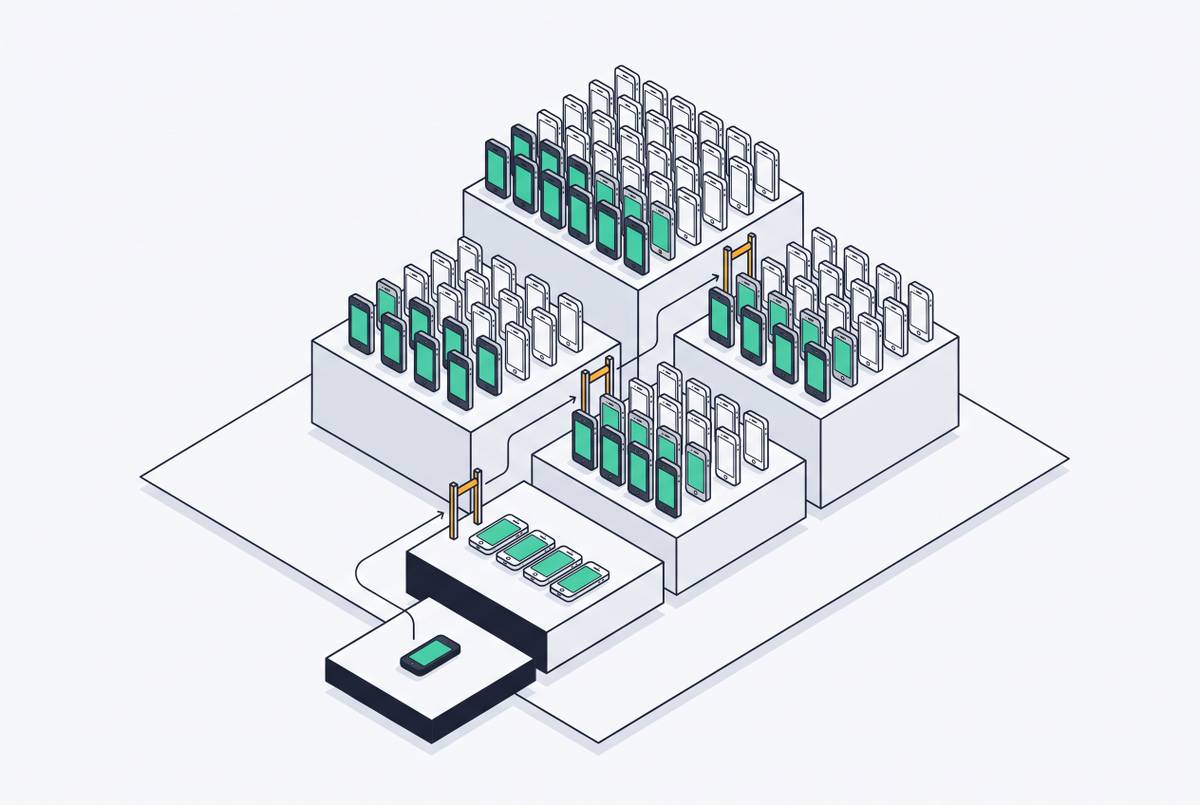
Staged distribution limits how many users get a release before a regression is found. At a low rollout percentage, a halt can protect the remaining audience, but only if monitoring produces a decision before distribution expands. An unmonitored rollout is merely a slower full release. The store’s progression mechanism determines when that decision must happen and what control the team has over the next increase.
Google Play lets the developer set the starting percentage and raise it manually, without automatic daily progression. Both new and existing users are selected at random within the rollout percentage. Halting prevents additional users from receiving the release but does not downgrade installed devices. Resuming does not select a fresh cohort. The same selected cohort remains affected, so a resume is not a reset of the release’s exposure history.
Apple uses a fixed automatic schedule that advances through progressively larger audience slices each day. Developers can pause the ramp but cannot choose a custom percentage or skip stages. The schedule applies only to automatic updates. Users who update manually bypass it, so more users get the release early than the phase percentage suggests. Apple’s App Store Connect help also states that a membership lapse stops phased release, and reinstatement makes the app available to all users immediately, regardless of the stage previously reached.
These differences give the stores distinct operational requirements. Google teams must actively decide when to increase exposure, while Apple teams must manage the start time and pause before the fixed ramp advances. Apple phased release provides a safety mechanism: its manual-update path remains open, and the team does not control randomization.
Why incident thresholds must be written before the release ships, not diagnosed during one
A team that has invested months in a feature has reasons to explain away an early crash-rate spike. The movement may look coincidental, temporary, or too small to justify interrupting the release. That hesitation has a cost while distribution continues. Pre-defined thresholds move the argument about acceptable risk to a time when the team is not also defending its work or managing an incident.
AI-generated code is harder to validate at the pace of production because agents can produce changes faster than people can validate them. Qodo’s 2026 State of AI Code Quality found that nearly half of engineering leaders identify reviewing and validating AI-generated code as the most critical quality and governance gap. The failure can be silent. Code may compile and pass basic checks yet break the intended business logic, with no sign of the error until users run into it.
Automated gates are useful because they evaluate a written condition without rationalizing a breach. Their criteria still need a specified action and owner so that an alert has a defined response.
The signal groups that belong in every mobile rollout monitoring plan
Technical health measures whether the application remains stable and usable. Crash-free sessions or crash-free users are the main measure of stability, and Android ANR rate tracks user-perceived application-not-responding events on their own. Startup success catches initialization failures even when they cause no crashes. Out-of-memory exits and frame or loading regressions provide secondary warnings that can precede more visible failures. An unmatched global average is a poor basis for judging any of these signals.
Critical-flow health measures whether users can complete the work the app exists to support. Login, purchase, and save success rates show failures that put revenue or user data integrity at risk, and first-session completion can show onboarding regressions even when the app keeps running. Flow importance changes the acceptable tolerance for failure. A hang during checkout can cause more damage than a higher-volume problem in a secondary feature, so frequency alone cannot determine severity.
Backend and support health covers failures that client stability metrics cannot explain on their own. Backend error rate, API latency, and queue depth reveal dependency failures or saturation as exposure grows. Support tickets provide a lagging but useful signal. They can identify degraded experiences before automated monitoring recognizes them, particularly when the application remains running but behaves incorrectly.
Each signal needs a source of truth, expected reporting delay, baseline window, comparable cohort, and minimum meaningful sample. The plan must also record warning and halt thresholds, an owner, and a response channel. Cohort matching is not an optional refinement. A new build’s first sessions in one country cannot fairly be compared with a mature build’s global monthly average. Comparisons should match the relevant version cohorts by market, acquisition source, device class, OS version, and lifecycle window as closely as the data allows, with uncertainty stated when samples remain small.
How to set quantitative thresholds for each signal category
A threshold should measure change against a matched baseline, because an absolute number alone cannot show that a release is safe. An app can double its crash rate and remain below a store enforcement boundary. The release has still degraded its users’ experience. Internal triggers must compare the new version with the version it replaces, with explicit warning and halt limits rather than a general instruction to watch for movement.
Crash-free session targets should reflect the app’s operating requirements. Consumer apps need a high baseline, and regulated or real-time-media apps need an even stricter standard. The best-performing teams get close to a rate so low that monitoring tools cannot reliably tell it apart from zero crashes. A material decline during the first hours of rollout is a rollback candidate even when the resulting rate still looks strong in isolation.
Google publishes Android Vitals bad-behavior thresholds for user-perceived crashes and ANRs, covering both all-device rates and higher single-device-model rates. These boundaries affect both store visibility and internal reporting. They are enforcement limits. Internal halt criteria should fire well before a release reaches them, because crossing those boundaries already puts discoverability at risk. ANRs need their own trigger so that a combined stability score does not hide them.
Conversion thresholds require the same relative framing but depend on the app’s revenue model and user base. A drop that needs a closer look should pause expansion, and a larger drop should halt it. Where a valid control group exists, the comparison should use it without mistaking phased distribution for a controlled experiment. The executable condition can specify that login success falling beyond tolerance freezes exposure and engages backend and client owners. The tolerance must be written quantitatively before shipment.
Performance needs criteria alongside those for stability and conversion. Cold start on mid-range devices, first-frame render on iOS, and battery drain per hour of active use are measures that can gate a release. Android Vitals flags excessively long cold starts, but that boundary is not an acceptable operating target. When reports arrive too late to support a sound judgment, exposure should stay where it is. Increasing distribution while waiting is not neutral because it exposes more users to an unvalidated change.
The release record should contain each threshold and the dashboard or query that evaluates it. It must distinguish a healthy reading from an unavailable one. A spreadsheet put together by hand during an incident cannot take the place of a set way to check the thresholds. The evidence needed to authorize the next increase must be accessible to the person responsible for that decision.
The authority chain that acts on threshold breaches during a live rollout
A threshold without an authorized owner still leaves a live judgment unresolved. Delay can turn a small defect into a fleet-wide incident even when the alert was accurate. Every rollout needs a named authority chain. The release lead must have the authority to halt store distribution and disable related feature flags when a technical threshold is crossed, without having to ask senior leadership for routine permission.
A critical-flow breach activates the incident commander, who coordinates backend and client owners across teams. The backend owner must be authorized to stop percentage increases and initiate load shedding when saturation rises with exposure. Resuming expansion requires a separate, explicit approval. A named approver records the evidence and authorizes the next increase only after metrics remain healthy for the required observation window.
The decision table should make each condition, action, and owner usable by the on-call engineer. Routine threshold breaches should not require a live escalation to senior leadership. Exceptional risks need their own escalation rules. Data integrity risk, regulatory exposure, and a revenue-critical flow outage are specific conditions for that escalation, rather than reasons to route every halt through the same chain.
Automation can find and flag breaches before a person sees the dashboard, but named humans still decide when to halt and resume. Automation does not remove accountability for the response. The record must show who halted distribution, which signal crossed which threshold, and who approved resumption. Qodo’s report found that 89% of organizations have experienced an AI-related production incident. For AI-assisted pipelines, the governance trail must therefore extend backward to where generated code entered the build, as well as forward through the rollout decisions.
Putting the framework together: a pre-release rollout readiness checklist
The readiness checklist brings these requirements into one documented release artifact. The first entry defines the release unit and separates changes that can be mitigated remotely from those requiring a new binary and store review. Server configuration, feature flags, and live bundles belong on the remote-mitigation side where applicable. That distinction must exist before submission.
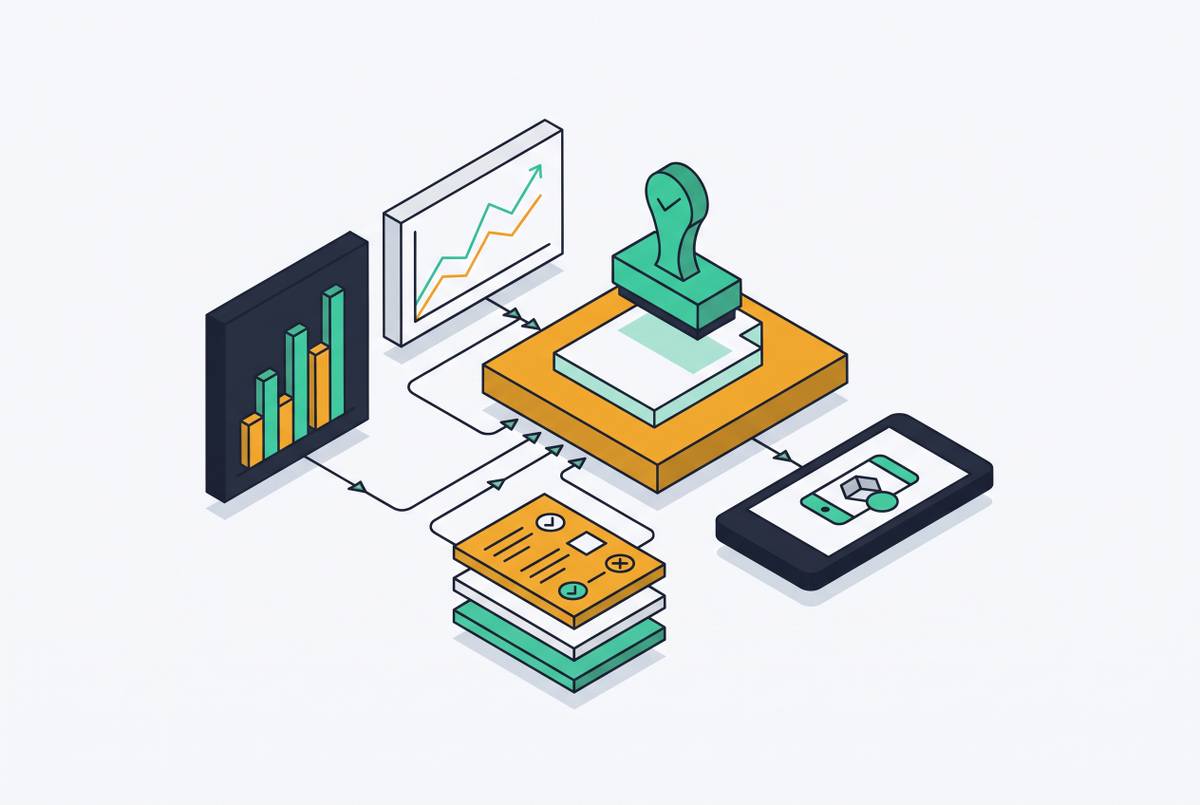
The signal plan must spell out how to track technical health, critical-flow health, and backend and support health. For each signal, it records the source, delay, baseline, comparable cohort, and minimum sample. The threshold document then supplies relative warning and halt limits with dashboard and query links. The decision table makes those limits executable. Its conditions must cover fatal crash clusters, ANR clusters, login or purchase declines, backend saturation, and inconclusive readings caused by reporting delay.
The authority record names the release lead, incident commander, backend owner, and approver, with availability confirmed for the observation window. The store control plan sets out Android’s starting percentage and review gates, or when each of iOS’s phases starts and what calls for a pause. It also records any server-side feature flags that independently gate new client behavior. The recovery path completes the operational picture. For code defects, configuration bugs, dependency failures, and deployment errors, it identifies the appropriate flag disable, bundle rollback, binary halt, or forward fix, with estimated time to user impact.
AI-generated code does not require a different purpose for this checklist. A silent business-logic error makes it especially important to check early production signals against a known-good baseline. The finished artifact makes release decisions legible and auditable. It preserves the evidence behind a halt or increase, so quality is demonstrated through a defined process rather than inferred afterward from whether the release appeared to succeed.