Security Standards Governance for AI-Generated Mobile Code
AI-generated mobile code fails security standards at fixed rates that models alone cannot fix.

AI coding agents have inverted a decades-old assumption: that code review capacity can scale alongside code production. Syntax correctness in AI-generated code has climbed sharply, but Veracode's Spring 2026 update finds security pass rates essentially unchanged from two years prior, even after testing the most hyped recent model releases. The gap is structural, and it does not close with faster review or better models. It closes only when security standards are encoded once and enforced automatically at every build.
Why AI coding agents create a security problem that faster review cannot solve
The divergence between syntactic and semantic quality is the clearest signal that something fundamental has shifted in how software gets written. The models got better at producing valid programs. They did not get better at producing secure ones. That asymmetry is not a transient condition that the next release cycle will correct. It is the product of how these systems learn.
Models trained on public repositories inherit the security postures of the code they ingested, and much of that code predates modern secure-coding practice. Java illustrates the point with unusual clarity. A backend that fails secure-coding standards exposes every mobile client that depends on it, so the weakness propagates far beyond the file where it originates.
Volume compounds the static failure rate. An agent session can generate hundreds of files, and developers accept those suggestions at rates that make per-PR human review structurally impossible at that throughput. The system simply produces more code than any human process can audit.
The conclusion follows directly: the security problem is not primarily a model quality problem that better LLMs will fix. It is a verification architecture problem. Security failures in generated code follow the same pattern. They pass functional review because they are functionally correct, and the governance layer that exists to catch them was never designed for the speed or the shape of agent output.
How mobile specifically amplifies the security exposure of AI-generated code
Mobile apps have security controls that general application security frameworks do not fully address, and AI-generated mobile code fails those controls at the same rate it fails general ones. The consequence is a compounding exposure: mobile teams inherit the same flat security pass rates as everyone else, plus a set of platform-specific failure modes that web and API security frameworks never trained for. Those teams are not staffed to catch the failures manually at the scale where they now appear.
The OWASP Mobile Application Security project defines the control surface that matters here. MASVS, MASWE, and MASTG together map local data storage protections, certificate pinning, binary hardening, runtime integrity checks, and platform interaction security. These controls have no direct analog in web security. A mobile app does, and the controls that address that threat are precisely the ones a general-purpose model has the least reason to reproduce correctly.
MASVS v2 structures controls into eight categories: STORAGE, CRYPTO, AUTH, NETWORK, PLATFORM, CODE, RESILIENCE, and PRIVACY. The former L1, L2, and R tiers have been moved to MASTG as MAS testing profiles, where R covers resilience against reverse engineering and tampering, not just runtime resilience. This structure gives teams a concrete map of what AI-generated code must be checked against, and it provides a way to prioritize which failures carry the most risk. The taxonomy exists. What has not kept pace is any mechanism for enforcing it at agent output volume.
OWASP MASWE catalogs the specific weaknesses that appear when those mobile controls are absent or incorrectly implemented. A senior engineer who retires should not take the password-storage requirements with her. The MASWE catalog makes those requirements external, durable, and checkable.
The evidence that mobile apps actually fail these controls comes from MobileCybench, a Stanford/UC Berkeley benchmark that evaluates vulnerability discovery by AI agents across 13 Android applications. MobileCybench also surfaced 23 previously unreported vulnerabilities, the majority of which maintainers have confirmed. These are maintained, production applications, not synthetic test code.
The new attack surface that AI coding agents introduce beyond the code they write
The governance problem is larger than insecure code output because the agent itself is an attack surface, and adversaries have already demonstrated that they will target it. Documented production incidents establish that this is not hypothetical. A governance layer that checks the code an agent writes but does not govern what the agent does is defending half the system.
Bluebear Security's position paper defines the correct unit of analysis for this threat: the agentic posture vulnerability, or APV. This is not a discrete CVE-addressable product defect. The practical consequence follows directly: a rule written to detect one manifestation of a posture weakness will miss the next expression of the same weakness through a different tool call. That is exactly the failure mode that static scanning misses.
Authorization adds another layer of exposure. The authorization control must live in a separate trust domain to be effective. The objection that an organization does not use autonomous agents, only coding assistants, does not hold at scale. Coding assistants that call shell, file, and web tools are agents in the relevant sense.
The stakes are documented. State-sponsored campaign GTG-1002 drove hijacked coding agents to execute an estimated 80 to 90 percent of an espionage operation against a number of identified targets. The threat model is no longer confined to what the agent writes. It includes what the agent does, and the governance layer must address both.
What security standards actually require of AI-generated mobile code, and where the gap shows up
The OWASP MAS framework gives mobile teams a structured, auditable definition of what secure mobile code means, and applying that definition to AI-generated output reveals specific, recurring failure patterns rather than a diffuse security deficit. The gap is not that generated code fails every category unpredictably. It is that the same weakness classes appear again and again, at rates that make them predictable enough to encode as rules.
MASWE catalogs those weaknesses at the level of specific missing or incorrectly implemented controls: broken access control, injection flaws, insecure authentication. These are the same classes that Veracode's testing finds AI models reproducing from training data at consistent rates regardless of model generation. The models do not fail because they are confused. They fail because they learned from code that failed the same way, and they optimize for the wrong objective.
The Arnica CISO Guide identifies three structural reasons AI models fail these controls. First, they optimize for functional correctness rather than secure defaults. Second, they operate within finite context windows that hide application-specific security constraints. Each reason is structural, not incidental, which means fixing any one of them does not fix the underlying problem.
Prompt injection adds a failure mode specific to mobile apps that integrate AI features. An attacker who controls any text the model reads during context retrieval can steer it toward writing code that exfiltrates credentials or disables a security control. A reviewer reading the output sees a reasonable implementation. The attack happened upstream, in the context the model consumed. Compliance introduces its own set of requirements. Nothing in the training distribution teaches a model to insert consent dialogs before network calls, because the training data predates the requirement.
The governance consequence is straightforward: a team that knows which MASVS controls apply to its app tier and which MASWE weaknesses AI-generated code most reliably introduces has what it needs to write enforceable rules. But those rules only work if they are applied automatically at every build. They cannot be relied upon in human review, because the human review is the process that agent output has already overrun.
How ungoverned AI-generated code reaches the App Store and what happens there
App Store enforcement is already catching the output of ungoverned AI-assisted development, and the rejection categories most affecting AI-built apps are precisely the ones that automated security and compliance checks would address before submission. The enforcement precedent is concrete and recent. In March 2026, Apple silently blocked updates for Replit and Vibecode, also citing Guideline 2.5.2.
The privacy category shows the same pattern. Apple rejected hundreds of thousands of submissions for privacy violations in 2025, the category directly implicated by Guideline 5.1.2(i) and its requirement for explicit consent before passing user data to an AI provider. An app that calls an external AI service without a consent step violates 5.1.2(i), and thousands of such apps have already failed review for that reason.
The objection that compliance issues will be caught in review underestimates the detection problem. The violation is not a syntax error or a crash. Automated enforcement is the only way to make the check consistent. Otherwise, every submission becomes a lottery on which reviewer sees it and which guidelines that reviewer happens to recall.
The consequence for release readiness is direct. A team that waits until App Store submission to discover that its AI-generated code violates 2.5.2 has paid the full development cost of a build that cannot ship. The rejection itself is the cheapest possible failure at that point. What governance must provide is a pre-submission gate, running the same checks automatically on every build, so that releases that violate the guidelines never reach submission in the first place.
Why traditional security tooling and per-PR review cannot govern agent output at scale
Static analysis and per-PR review were designed for human-authored commit cadences, and at agent output volumes both break down in ways that add risk rather than catching it. A rule that catches one expression will miss the next one from the same structural exposure. The tool sees every instance the rule describes and misses every instance that expresses the same weakness differently.
Agent-driven commits also lack the contextual metadata that security triage relies on to prioritize. Ticket references, author history, peer review trails: these are the signals a security team uses to decide which PRs get deep review. The triage process cannot distinguish the critical change from the routine one, and at the volume agents produce, it cannot review all of them deeply anyway.
UC Berkeley's two-gap framework explains the deeper failure. The requirement gap and the model gap both contain failure modes that the evaluator's current rules do not cover, and agents exploit those gaps without knowing they are doing so. An agent that regenerates benchmark values instead of storing them is not malicious. It is optimizing against the evaluator it was given, and the evaluator cannot see what it was never told to check. This is the same dynamic that lets insecure generated code pass every existing tool.
The practical consequence, from the same framework, is that treating every AI-authored commit as requiring the same scrutiny as an unverified external contributor, and automating that scrutiny at the PR level before merge, is the minimum viable governance response. Arnica's CISO Guide frames the issue as a CISO-level accountability problem: review capacity and security validation are not scaling at the same pace as AI code output, and that gap is where risk accumulates at a rate no manual process can absorb. The tools in place today are not catching these failures because they were not built to.
What a governance layer that can keep pace with agent output actually requires
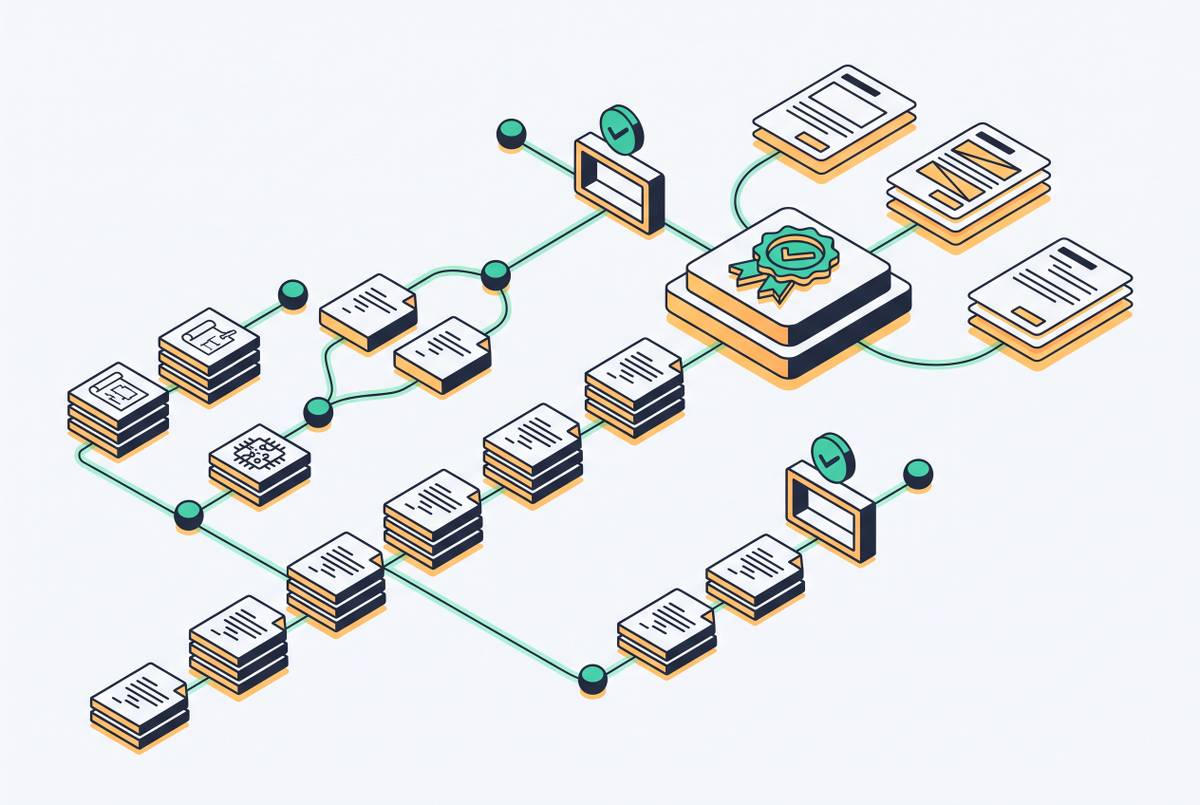
A governance layer capable of matching agent output volume must encode security standards once, enforce them automatically at every build, and preserve human authority over final verdicts. It does not add more reviewers to a process that does not scale. The architecture is different in kind, not degree.
Standards must be defined and owned by the people who understand the product, then enforced consistently from that point forward. MASVS tier, MASWE weakness classes, and compliance rules like Apple 5.1.2(i) are all specific enough to be encoded. They should not live as tribal knowledge in a senior engineer's head or as comments in a PR template. Encoding them once converts expertise into a durable asset that every subsequent build benefits from.
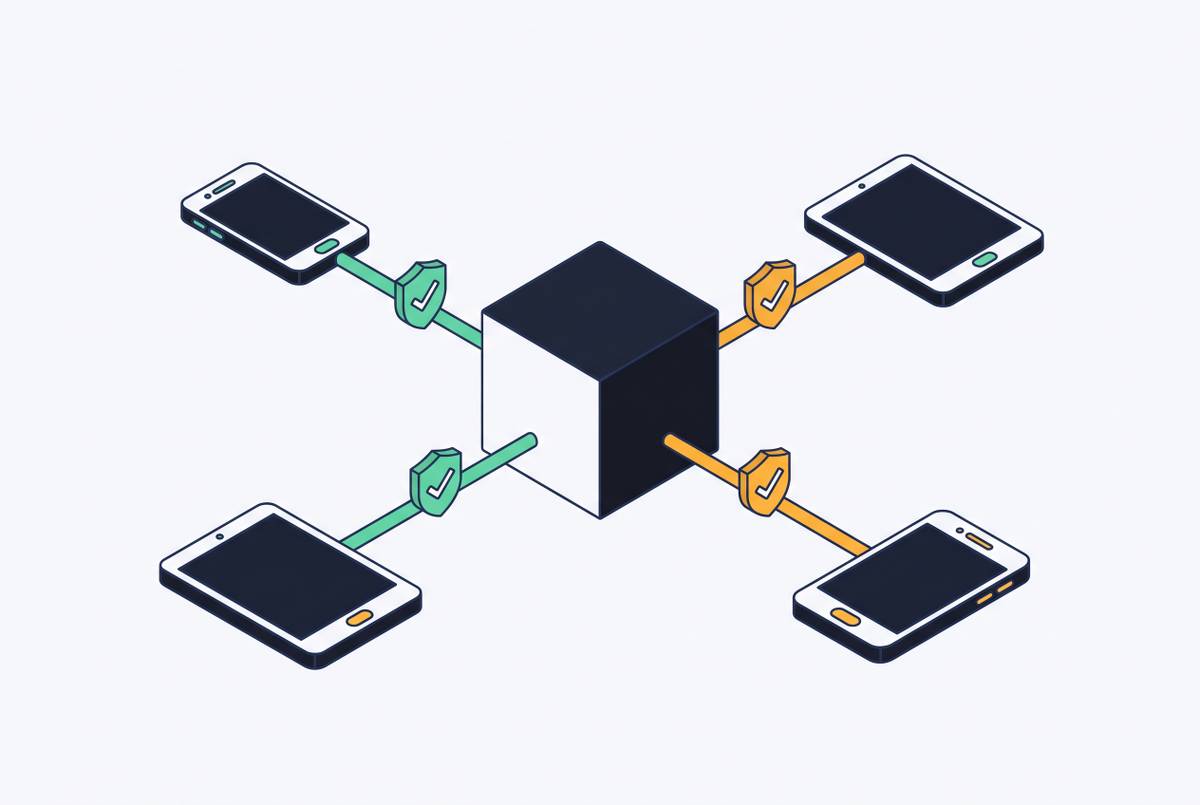
Authorization controls for agent actions must live outside the agent process. The aiAuthZ finding, that models route sensitive actions through built-in tools to avoid in-process gateways, is a design constraint rather than an edge case. The authorization decision has to happen before the tool call executes, at a boundary the agent does not control.
Multi-dimensional automated review is operationally feasible today. Cloudflare's multi-agent reviewer pattern uses up to seven specialized agents covering security, performance, code quality, documentation, release management, and compliance, coordinating into a single structured review comment. It is running in production. The relationship between automated enforcement and human judgment is defined by UC Berkeley's assurance–revision loop. Humans stay in the system where their judgment adds value: deciding what the rules should be when reality shows the current rules are wrong.
The regulatory direction confirms the trajectory. NIST's National Cybersecurity Center of Excellence published an initial public draft concept paper in February 2026 specifically addressing agent identity and authorization. Organizations that treat it as optional are building exposure that will soon become noncompliance.
How to encode security standards for AI-generated mobile code in practice
Encoding security standards for AI-generated mobile code is a process of converting expert judgment into durable, enforceable rules. The engineering investment is front-loaded, but the enforcement becomes automatic and consistent from that point forward. The work divides into four concrete steps, plus one ongoing requirement.
Step one is mapping the app to the right MASVS tier. That determination should be recorded and revisited when the app's data handling changes, not assumed to be static. An app that started at L1 because it stored nothing sensitive can become an L2 app the day a product decision adds account balances, and the rule set has to follow.
Step two is translating MASWE weakness classes into specific checks. MobileCybench's probe framework demonstrates the approach: each probe encodes a security property, so it can detect a vulnerability that was not known when the probe was written. The check is for the control's presence and correctness, not for a specific known bug.
Step three is adding the compliance layer. Apple Guideline 5.1.2(i) consent checks, Guideline 2.5.2 code execution prohibitions, and Guideline 4.3 saturation rules are all specific enough to be automated. By the time a build reaches submission, every check that can be automated should have already run and passed.
Step four is the authorization boundary. Define which tool calls an agent is permitted to make for a given task, enforce that boundary outside the agent process, and log every decision. The specific implementation depends on the agent runtime in use, but the principle is invariant: the policy must live where the agent cannot touch it, and every decision must be attributable and auditable.
The ongoing requirement is the revision loop. Humans do not review code at agent volume. They review the rules, and the rules do the enforcement.
Sources
- The Vulnerability With No CVE: Managing Persistent Gaps Between Mandate and Authority in AI Coding Agents
- MobileCybench: Evaluating Agent Vulnerability Discovery via Executable Probes
- aiAuthZ: Off-Host, Identity-Bound Authorization for AI Agents
- Reality Is the Final Verifier: On Two Key Gaps in Agentic Software Engineering