Engineering Days Blocked by QA Bottlenecks in Mobile Pipelines
AI-generated code accelerates faster than mobile QA can verify it.
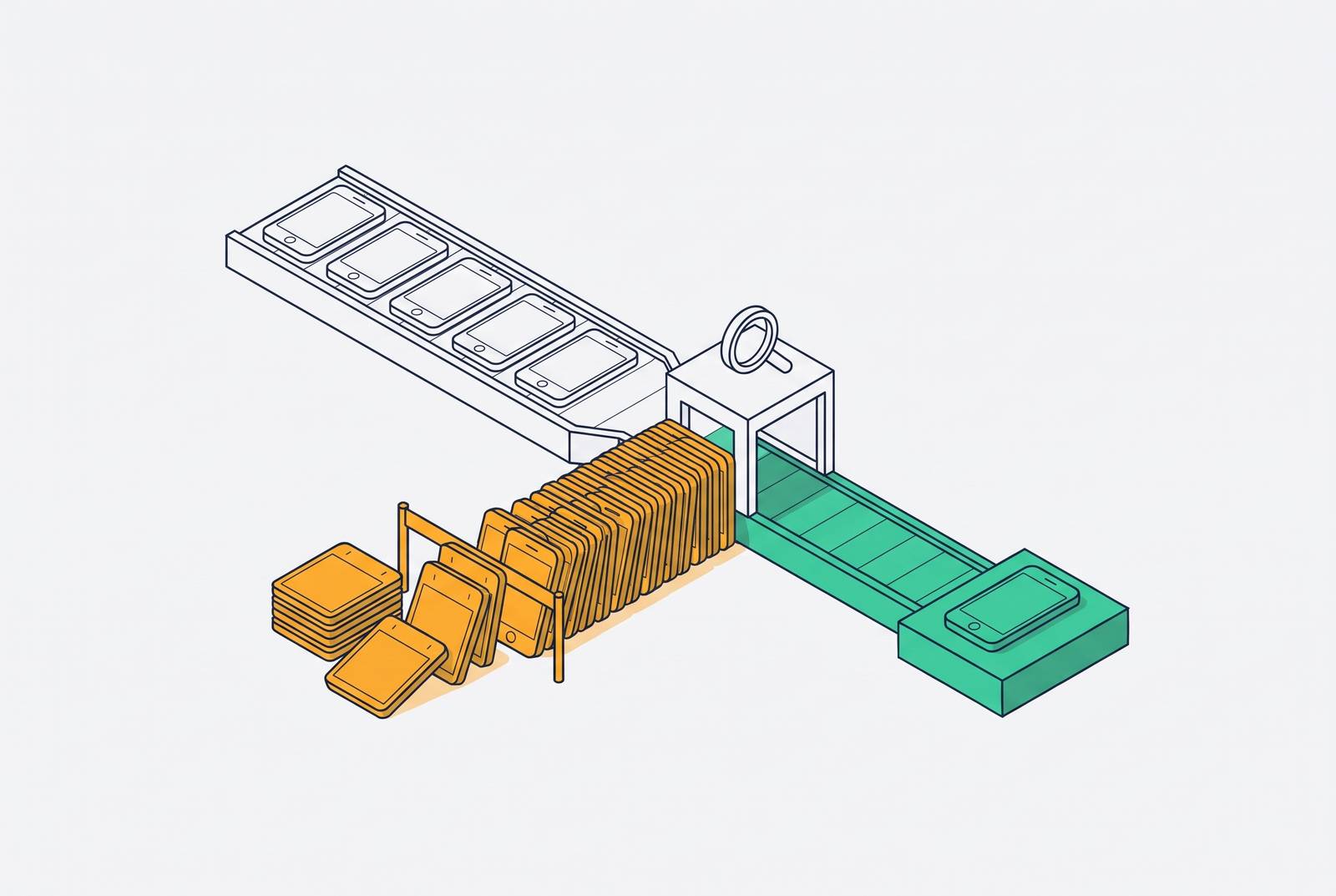
Mobile QA bottlenecks consume engineering days because code generation can accelerate while verification remains constrained by builds, devices, signing, and store review. The resulting delays are a measurable mismatch between the work entering the pipeline and its capacity to establish that a release is ready for users.
Why mobile CI is structurally harder than web CI — and why that gap is widening
An iOS build requires macOS with Xcode and cannot run on a Linux runner, while Android requires the SDK and Gradle, with separate signing and artifact requirements. These environments are not interchangeable execution targets. Bitrise’s 2026 analysis identifies macOS virtualization, resource-intensive Xcode builds, code signing, device testing, and App Store submission as distinct sources of complexity. Resolving them requires more than general CI knowledge.
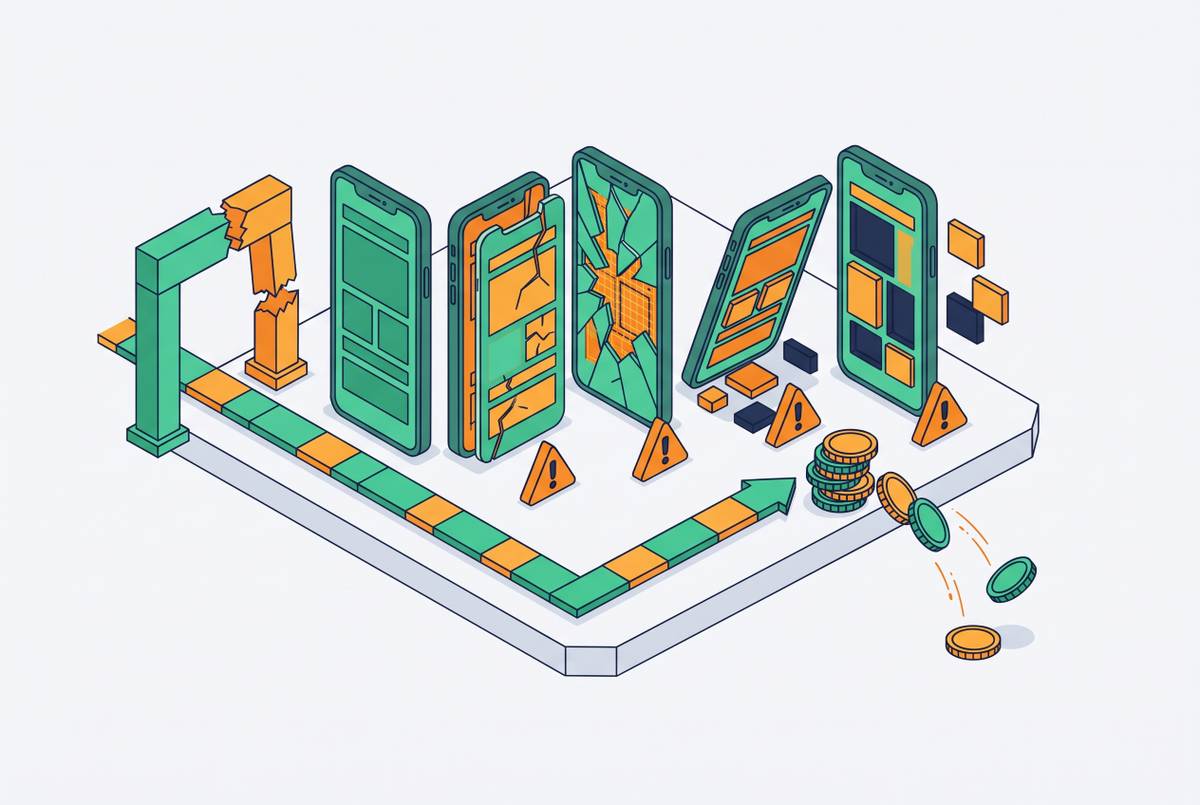
Emulators cannot reproduce manufacturer-specific rendering issues, manufacturer interrupts, or the memory constraints of budget devices, so verification has to include real hardware too. Even when a build succeeds, it still has to pass store review, which takes hours to days and has no equivalent in web deployment. Meanwhile, web development has cloud tooling that is more mature and built for the job, so mobile teams have to deal with more of the platform complexity themselves. As code generation accelerates, these constraints become a widening gap between producing a change and proving it can ship.
How AI coding agents shift the bottleneck from writing code to verifying it
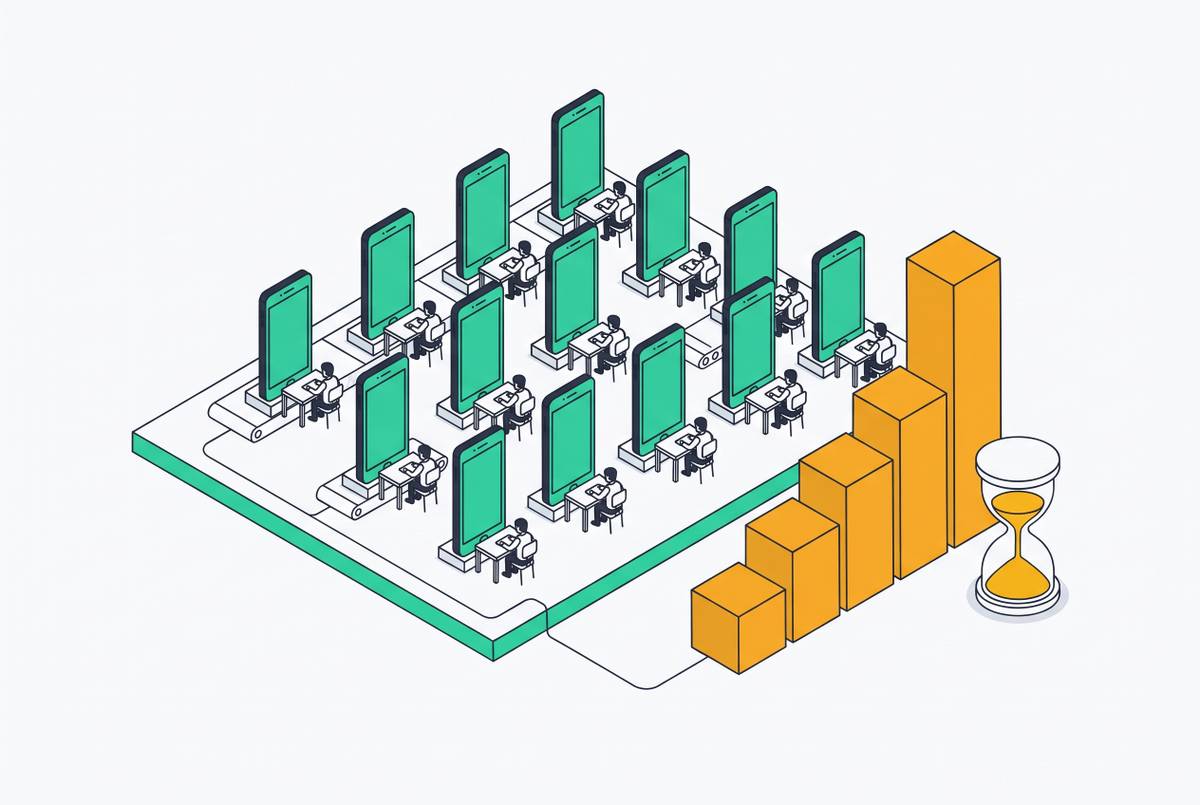
Bitrise states that “every line of AI-generated code still needs to be built, tested, verified, signed, deployed, and monitored — none of that got faster because code generation did”. Queues built for the pace of human-speed development now have more work coming in but no more capacity to process it. Pull requests accelerate, but releases do not necessarily follow. The limiting resource shifts downstream into verification.
DORA’s 2025 report characterizes AI as an amplifier that magnifies the strengths of high-performing organizations and the dysfunctions of struggling ones. A pipeline that was barely adequate before agents can become the primary constraint once they increase code volume. Faster individual work cannot compensate for a delivery system that cannot absorb it.
Background agents can take a ticket, write code, run tests, and open a pull request, but passing unit tests does not establish that a real user can complete the feature end to end. Only a minority of developers work with centralized rules, and a similarly small share report that agents always follow organizational standards. That leaves verification to absorb inconsistent adherence as well as increased volume. When AI generates both implementation and tests, those tests cannot be treated as independent evidence that the requirements were met.
Where engineering days actually disappear inside a mobile pipeline
The first delays that teams run into again and again are in pre-merge checks. A five-minute target covers lint, static analysis, a unit test subset, and compile checks, while gates that run significantly longer invite teams to ignore, disable, or bypass them. Sequential execution of necessary work is usually the bottleneck. The distinction is important because weakening a gate and removing avoidable waiting are different responses. The former reduces the evidence available before merge without resolving the underlying execution problem.
Post-merge, the work grows to include the full unit and integration suite, smoke tests, and the signed release artifact. Here, the build-once, promote-same-binary rule preserves the connection between testing and deployment. Rebuilding for each environment risks producing a different binary from the one tested. Pre-deploy validation then adds release candidate checks, more device testing, and the work needed to prepare for store submission. Device farm latency and provisioning accumulate at this stage, before the release reaches the external review gate.
Signing failures can stop that progression altogether. Expired certificates and mismatched provisioning profiles can block an entire release, and resolving them requires domain-specific knowledge that is rarely spread across the team. After deployment, staged rollout monitoring and crash rate tracking provide another verification layer, but failures discovered there have the highest cost. Google’s Play Console guidance states that core Android Vitals affect app discoverability on Google Play. A defect that survives the pipeline can therefore affect more than the users who encounter it directly.
Flaky tests erode confidence across all these stages. False failures block pull requests and take time to look into without finding a real defect in the product. Repeated false alarms also weaken trust in the gates, encouraging teams to bypass checks that exist for sound reasons. Selector drift and timing brittleness add maintenance work to the verification load. Engineering days disappear through both this repetition and conspicuous release failures.
How single-owner pipelines concentrate risk and create a release bottleneck invisible to sprint metrics
A mobile team can have six developers shipping code and still depend on one person to get a release into production. That engineer holds the CI job structure, signing credentials, Fastlane knowledge, and judgment about which App Store Connect warning can safely be ignored. The dependency develops through accumulated work. Each platform problem that engineer solves adds to what they know, which others may never need to learn until a release is blocked.
A vacation, reassignment, or sick day on release day can remove the person needed to finish the process. A departure can leave the same gap when the handover covers application code but not scripts, credentials, workarounds, and platform quirks. Documentation helps only if someone else can use it. A runbook written by the owner is not evidence of shared capacity until another engineer has successfully followed it without help.
Sprint reports can conceal this constraint while showing healthy development throughput. Tickets close, pull requests merge, and QA receives builds, yet releases queue when the work converges on the person who can ship. Increasing feature staffing from five engineers to eight increases arrivals at that constraint without expanding its capacity. Customers cannot use a merged pull request. Moreover, the release owner is often the senior engineer most needed for architecture, reviews, and mentoring, so release work also displaces the expertise the rest of the team depends on.
Why app store compliance turns a finished build into a blocked release
Apple’s 2025 report on app store submissions and rejections shows that there were many millions of submissions and that a large share were rejected. It also identifies Performance as the largest rejection category, with more citations than Legal, Design, Business, and Safety combined. This is a measurable quality gate. Crashes and performance regressions are failures that pre-submission testing can catch. Privacy violations account for another large portion of rejections and create a further opportunity for checks before submission.
Google Play has a significantly lower rejection rate, but Google deleted millions of apps for terms violations, with data protection and privacy violations the most frequent reason. Google’s target API requirements state that, starting August 31, 2026, new apps and app updates must target Android 16 (API level 36) or higher to be submitted to Google Play. Google’s User Data policy requires an accurate Data Safety declaration that matches the app’s privacy policy disclosures, as well as a privacy policy link. Compliance belongs within engineering preparation.
A crash caught pre-merge can cost an hour, while the same crash in production adds store ratings, support volume, and, on Android, potential discoverability penalties to the repair work. A rejection introduces another submission cycle measured in hours to several days. Store review itself remains an external dependency, but avoidable resubmissions add latency that teams can address before submission.
What the cumulative cost of these bottlenecks actually looks like in engineering time and revenue
When a dedicated QA function is absent or understaffed, testing defaults to the engineers who wrote the code. At senior mobile engineer compensation levels, that is the highest-cost testing available. The expense is not confined to payroll. Time spent manually checking a release is time unavailable for architecture, feature work, reviews, or mentoring.
Manual-heavy QA also consumes a large share of working hours maintaining existing tests, leaving less time for extending coverage or finding new bugs. That maintenance competes with the work needed to improve verification. If testing bottlenecks extend releases into multi-week cycles, the team ships a fraction of the releases achievable with proper automation. Releasing seventeen times a year, compared with daily releases, limits feature delivery and how quickly the team can correct quality problems after users encounter them.
Luciq’s account of Dabble provides a concrete example of the time exposed by this constraint. Before adopting agentic mobile observability, Dabble engineers each spent up to twenty hours a week on manual triage. Afterward, they often resolved issues in minutes and could deploy fixes in as little as thirty minutes. Those figures measure different things, so they cannot be compared directly as times for two identical tasks. Even so, the relationship is significant for a high-stakes mobile product because triage consumes engineering capacity while the time to deploy a fix determines how long a production problem remains unresolved.
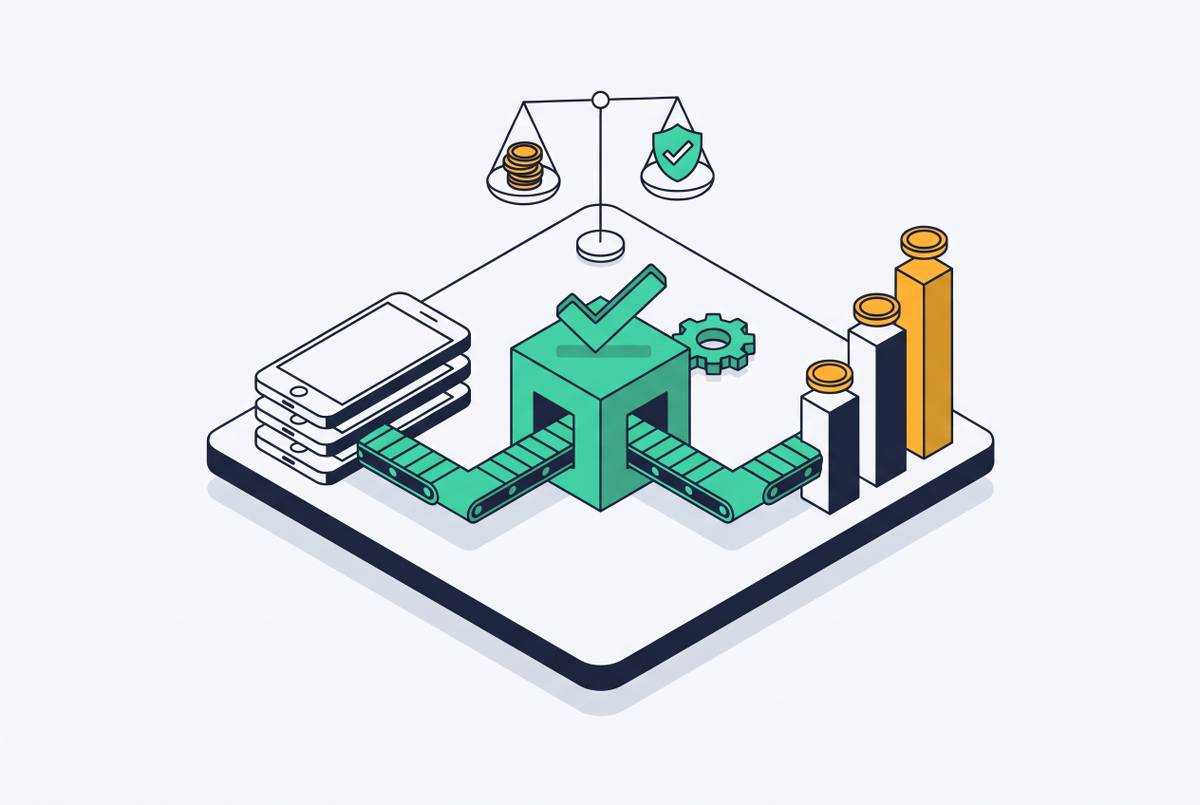
For that reason, faster recovery is a revenue protection measure rather than merely a developer experience improvement. A team can track the cost by counting the time engineers spend looking into failures, maintaining tests, fixing signing, and doing submission work again. Release cadence and recovery time show a separate consequence, namely how long customers wait for features and corrections. The brief establishes that those delays consume both labor and delivery capacity, making them business costs, without supporting a universal dollar value for them.
What stops being normal once engineering leaders can see the bottlenecks clearly
The recurring failures are predictable enough to distinguish from unavoidable platform constraints. Selector drift creates maintenance work, signing knowledge concentrates in one owner, and testable defects reach store review. Each has a recognizable place in the delivery system. Treating their cost as normal allows engineering time to subsidize a verification layer that has not kept pace with code generation. DORA’s amplifier framing makes that posture especially consequential when coding agents increase the work entering an already constrained pipeline.
The leadership response is to build governance into the SDLC. Quality expectations should be defined once, owned by people who understand the product, and enforced automatically across builds, pull requests, and releases. Shared rules replace negotiated tribal knowledge at release time. That shift also changes QA’s role from primarily executing checks to governing specifications. When AI generates code and tests, QA engineers must judge whether test generation reflects requirements rather than merely reproducing the implementation’s assumptions.
Expert verification agents provide the structural counterpart to coding agents by addressing product intent, design consistency, security, performance, accessibility, and store compliance. They aim to bring verification closer to agent speed while keeping people in charge of release decisions. Automation gives the people accountable for quality a way to enforce their expectations across a growing volume of changes. The question for engineering leaders is whether the current gap is being paid for in engineering days that could be recovered.