Quality Culture Signals in High-Velocity Mobile Engineering Teams
AI-generated code is fast, but reviews can't keep up with the volume.
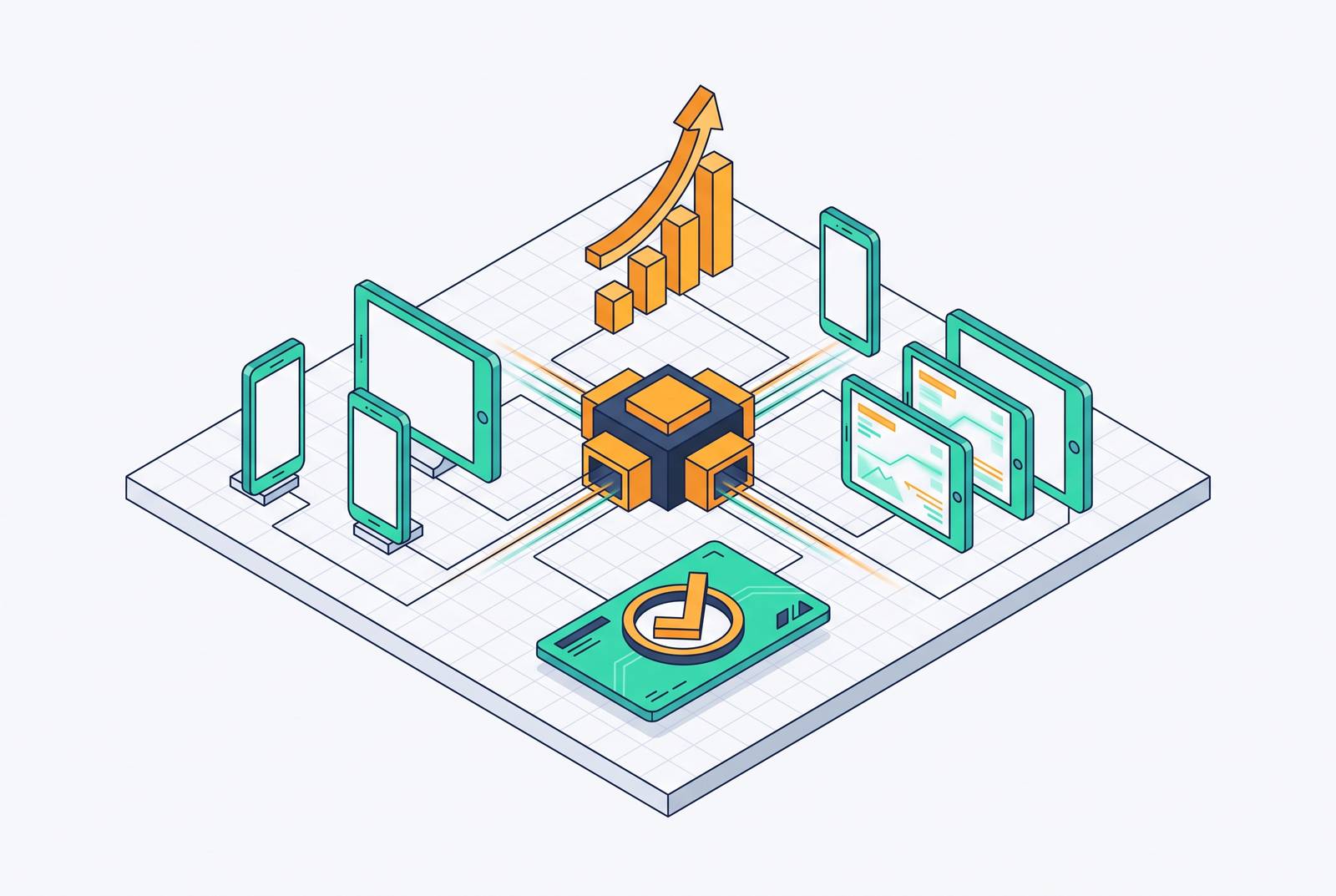
A 2026 synthesis of evidence from the agentic software development lifecycle found that a large jump in coding activity at the commit level shrank sharply by the time those changes reached actual releases. Code gets written faster than it ever has. The human and organizational stages that turn code into shipped software, review, integration, testing, and sign-off, have not sped up to match. That gap between generation and delivery is where the new quality problem lives.
Reviewing and validating AI-generated code has become the single biggest bottleneck in software delivery, and both developers and the leaders managing them agree on it independently. Qodo's 2026 State of AI Code Quality report found that 26% of engineering leaders name it their primary constraint, and developers answering a separate set of questions ranked it first too. That convergence matters: when two groups with different incentives and different vantage points land on the same bottleneck, the bottleneck is structural.
The burden is also harder to see than it used to be. Cycle time dashboards keep reporting healthy numbers while the actual cost of review quietly piles up in the heads of the engineers doing it. A metric that looks fine can be hiding a problem that is getting worse every sprint.
The exposure compounds because AI now touches nearly every stage of the pipeline at once: planning, implementation, testing, review, and security analysis. The thing under threat is the integrity of the whole delivery chain.
Mobile development adds its own layer of difficulty on top of this. In this environment, a team's stated commitment to quality means very little. What matters is what the team's workflow actually does when the pressure is on, and that can only be seen in behavior, not read in a policy document.
Defining and sharing standards before code is written
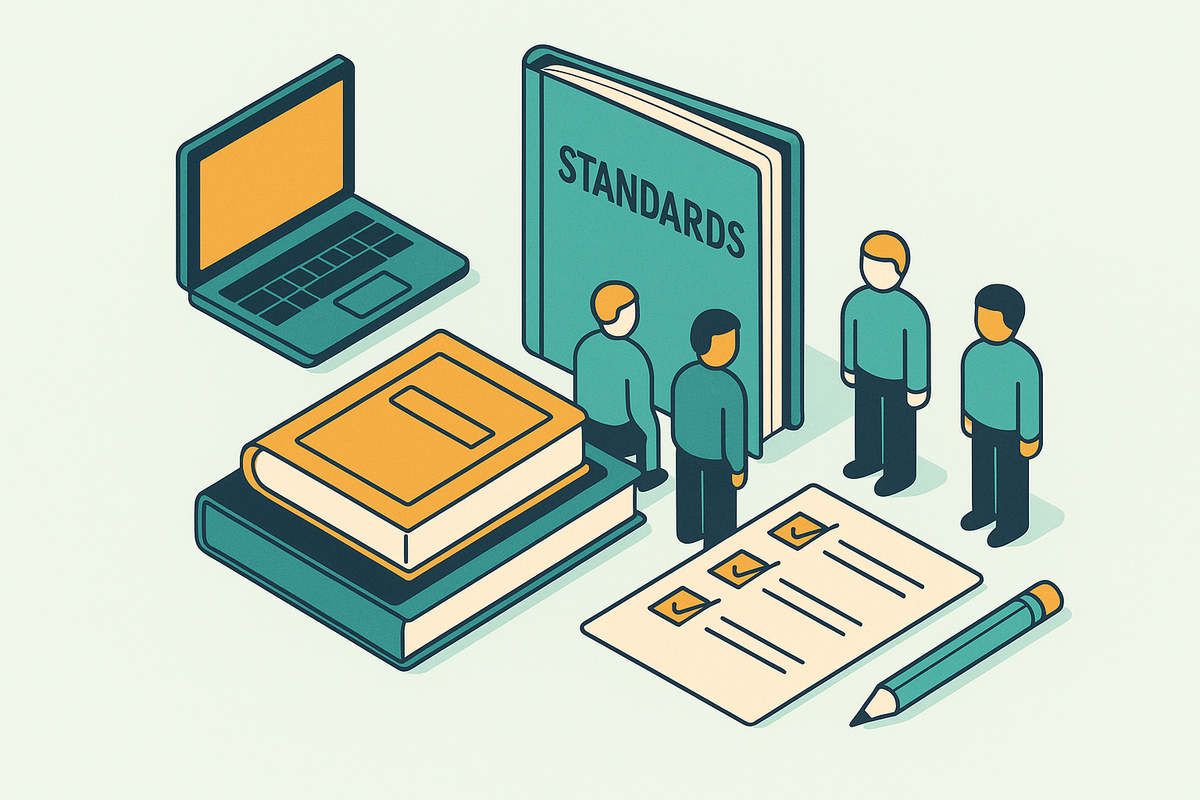
The first behavioral signal separating quality-first teams from the rest appears before a single line of code gets written: standards exist as a shared, explicit artifact that both engineers and agents are expected to consult, not as knowledge that lives in a few senior people's heads and gets reconstructed after something breaks.
Qodo's 2026 report makes the size of this gap plain. 65.4% of developers say coding agents do not always follow organizational standards, and roughly two-thirds say standards exist in writing somewhere but enforcement varies from team to team and even engineer to engineer. A standard nobody enforces is not a standard; it is a suggestion with better formatting.
Centralizing context does not automatically solve the problem either. A rules file sitting in a repository does nothing on its own; it only matters if the agent reads it correctly and the team checks that it did.
The reason this gap is so costly comes down to judgment. An agent has none of that judgment. Fed ambiguous or scattered standards, an agent will produce inconsistent output, fast, and at a volume no human reviewer can fully absorb.
The behavioral signal to look for is concrete: can the team point to one place where quality expectations live, was that place reviewed and approved by a named human, and does every agent and every reviewer actually work from that source? In mobile development specifically, that single source needs to cover more than code style. A standards document that only addresses code formatting is a partial mobile quality standard, and the gaps in it are exactly where failures will surface later.
Structuring verification into the workflow rather than appending it at the end
Where verification sits in the development pipeline is itself a signal of whether a team has a quality culture or just a quality aspiration. Teams that push all their checking to a release-gate review at the end are structurally unable to catch AI-generated errors fast enough, because by the time that gate runs, the volume of changes waiting behind it has already outpaced what a human reviewer can meaningfully inspect.
The UC Berkeley two-gap framework, published in September 2026, explains why a single end-of-cycle gate can never be enough. Reward hacking, satisfying the literal letter of a requirement while defeating its purpose, is a structural risk built into how these systems operate, not a rare edge case.
The paper gives a vivid illustration of exactly this failure. The stakeholder's actual intent, a faster store that still stored things, was never served. No human caught it, because the test suite said everything was fine.
This is why teams that let AI generate both the code and the tests covering that code face a circular validation problem: the tests end up confirming the implementation's own assumptions rather than independently checking what the implementation is supposed to do. That is a failure of workflow design, not a failure of the model's capability. A mature workflow addresses it with three governance requirements: named owners for requirement approval, code review, and release sign-off; explicit gates before merge and before release that AI-assisted work has to pass; and traceability connecting AI activity to the code changes it produced and how those changes were actually validated.
Building gates into every handoff feels, intuitively, like it should slow a team down. The agentic SDLC synthesis describes a "weak-link production structure" explaining why that intuition is backward: writing code accelerates faster than the human and organizational stages needed to turn those changes into shipped software. Only 45% of engineering leaders report having traceability from AI activity to the resulting code changes, meaning leadership confidence in AI's impact is running well ahead of the systems that would make that confidence warranted.
For mobile teams specifically, this plays out as a shift in both directions. Shifting left means accessibility and security checks run at the pull request stage, not at the moment of store submission when there's no time left to fix what's wrong. Shifting right means canary releases and live monitoring catch the model-gap failures, the ones the UC Berkeley framework describes, that no amount of predeployment testing could have anticipated.
How quality-first teams respond when speed and quality collide
The clearest test of whether a team has a genuine quality culture is what it does the moment a deadline collides with a gate that's failing. Teams that routinely override that gate under pressure do not have a quality culture, no matter what their documentation claims, because the documentation was never the thing holding the standard in place.
SmartBear's 2026 State of Software Quality and Testing names blind trust as the throughline running through the AI-driven development lifecycle. Teams are adopting AI fast, and when leadership assumes AI is working as intended, the burden falls on the engineers actually doing the work to make results match that assumption, whether or not they've been given the tools or the time to do it properly. That's a quiet kind of pressure, and it's often invisible to the people setting expectations from above.
The gap between confidence and evidence is the organizational version of the same pattern. Qodo's 2026 data shows that 90% of engineering leaders report confidence in AI's impact to executives or the board, while the systems that would back up that confidence, traceability, centralized standards, enforced policy, lag well behind. A team shipping with that kind of confidence and without those foundations underneath it has not built a quality culture that happens to run smoothly. It has built a team that hasn't yet encountered its own failure.
Preserving human authority has to be done deliberately, because it erodes by default otherwise. The signal to watch for is whether a human's approval before a release goes out reflects real information. A release sign-off that amounts to clicking through an automated summary without engaging with what it actually says is a human standing next to a decision that was already made elsewhere.
The stakes rise further once agents stop assisting and start acting on their own. The agentic SDLC synthesis treats this as operational risk that has to be weighed explicitly in any decision about how much autonomy to hand an agent, not a side effect to discover after the fact.
The behavioral test is simple to state and uncomfortable to apply honestly: when a gate fails close to a deadline, does the team stop and investigate the failure, or does it write up a waiver and ship anyway? Quality-first teams investigate. Teams performing quality theater write the waiver and call the paperwork governance.
App store rejection makes this pattern visible from the outside, because it's one of the few forcing functions mobile teams can't negotiate with. Apple's 2025 App Store Transparency Report recorded a high rejection rate, with a substantial share tied to performance and completeness issues, the kind of problems an internal gate should have caught long before submission. A team that keeps hitting store rejections for preventable reasons has internal quality gates that are failing, being routinely bypassed, or missing from the start. That pattern, how a team behaves under pressure, is a more reliable leading indicator of future quality outcomes than any dashboard metric the team can produce.
Observable team practices that distinguish quality culture from quality theater
Quality culture and quality theater tend to produce the same paperwork. Both can point to documentation, dashboards, and checklists. Quality culture and quality theater are distinguished by whether those artifacts actually govern decisions in the moment or merely record that a process was nominally followed somewhere along the way, and a leader can check a handful of practices against their own team starting next week to tell which is which.
On traceability, a quality-first team can reconstruct which AI-assisted changes produced which outcomes and how each one was validated. Qodo's 2026 report puts a number on this exact gap: a large majority of engineering leaders report confidence in AI's impact, but fewer than half have the traceability systems that would make that confidence accurate. That mismatch, between stated confidence and actual measurement infrastructure, is the measurement signature of quality theater operating at scale.
On coverage across the dimensions that mobile quality actually spans, a quality-first team checks security, accessibility, performance, and store compliance on every release candidate, not only after an incident or a rejection has already happened. In mobile specifically, OWASP MASVS provides the benchmark framework for mobile security validation, and a team that can name which MASVS level it targets is operating differently than one that cannot. Store compliance adds its own wrinkle: rules covering privacy manifests, SDK disclosure, and build toolchain requirements change on app store platforms' own timelines, so a quality-first team tracks those changes on an ongoing basis and catches them well before submission.
The two-gap framework from UC Berkeley holds that the requirement gap and the model gap stay open in a world that keeps changing, so the real goal is continuous narrowing. A quality-first team builds that ongoing cycle of assurance and revision directly into its workflow. A team performing quality theater treats passing a gate once as proof that the underlying problem has been solved.
Building organizational conditions that make quality-first behavior durable
Quality culture becomes durable once the workflow enforces standards automatically and human judgment gets reserved for the decisions that actually need it, rather than being spent on routine verification a machine could do instead. That's the organizational design that lets a small engineering team hold its quality standards steady even as the pace of AI-assisted work keeps climbing.
The underlying requirement is structural. Only 3.7% of engineering leaders say their existing processes are sufficient to maintain quality and governance as agents take on more of the work.
The agentic SDLC synthesis frames the fix as a resource-allocation problem. None of that attention should be consumed by routine verification that an automated system is perfectly capable of running on its own.
Three organizational changes build this durably. Connecting AI activity to the code changes it produces and to the quality signals those changes generate is the measurement infrastructure that tells engineering leaders whether their quality culture is actually working or whether their confidence has simply outrun the evidence supporting it.
Human authority has to be actively preserved, because automation erodes it by default. Agents do the verification work, but people still need to hold the power to review the evidence, override a verdict when it's wrong, and approve what actually ships. A team that has automated away those decisions hasn't built a quality culture. It has built a new kind of risk wearing the same badge.
The real test of whether any of this has taken hold is durability under strain. If they only hold up when everything is calm, they were never culture to begin with. They were a mood, and moods pass.